
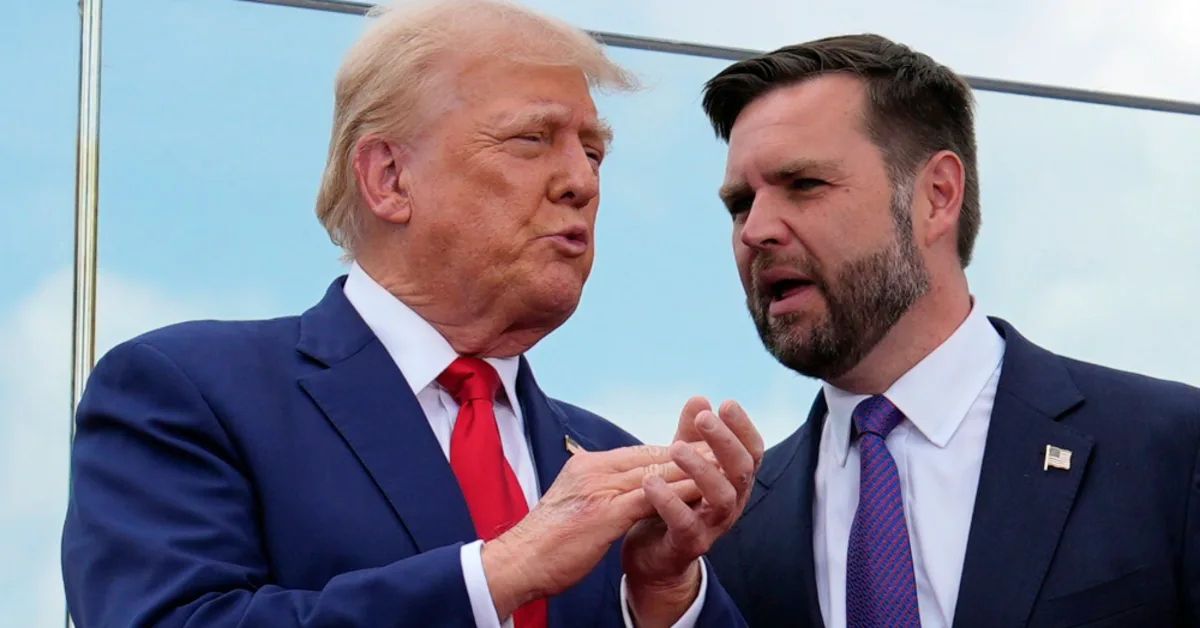

Vice President JD Vance publicly split from President Donald Trump on Wednesday, November 4, 2026, blaming the U.S. war with Iran for the Republican Party’s heavy losses in the midterm elections. In a lengthy post on X, Vance wrote that voters who backed the Trump-Vance ticket in 2024 turned around and voted for Democrats in 2026 because they were angry about a war they never wanted. The statement landed hours after Democrats completed a sweep of both chambers of Congress, and it immediately raised questions about Vance’s own political future ahead of a possible 2028 presidential run.
Vance’s Blunt Post: ‘The Reason We Lost Is the War’
Vance did not soften his words. The vice president wrote that the election results were not about turnout or messaging alone. They were about a conflict that has driven up fuel prices and frustrated the very voters who put the Republican ticket in office two years ago.
“The reason we lost is the war. The president himself said so last night.”
The post, described by BBC as a “carefully calibrated, 600-word statement,” also took direct aim at supporters of the Iran conflict. Vance challenged anyone who thought the war was worth the political cost to say so openly.
“If you’d like to argue it was worth it, that losing the Senate for the next 6 years was worth it, then do so. Argue it was a worthwhile cost to pay. Agree or disagree, that’s at least honest.”
The vice president made clear that he believed the war was the central factor behind the defeat. He wrote that “any honest conversation about where we go from here must start there”.
What the Pollster Told Vance
Vance based part of his analysis on conversations with a pollster he described as “one of the smartest people I know in politics.” According to Vance, the data showed that Republican voters did show up to vote in strong numbers. The problem was that many of them voted for the other side.
“The main problem is not turnout. The main problem is that many people who voted for Trump/Vance in 2024 voted for Democrats in 2026.”
The pollster identified four issues that drove these voters away from the Republican Party. Vance listed them in his post:
- End the war in Iran
- Focus on the cost of living and inflation
- Put America first
- Change the U.S. relationship with Israel
Vance wrote that “our voters showed up” and that those four reasons explain why many of them backed Democratic candidates. He called the pollster someone who “nailed the results”.
Trump’s Response: ‘Largely True’
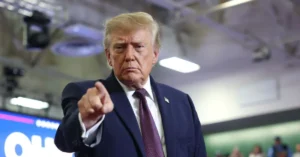
President Donald Trump did not reject Vance’s assessment outright. Speaking to reporters on Wednesday, Trump said the vice president’s view was “largely true” because the war had pushed gasoline prices higher in the short term.
“I think it’s largely true, because [the Iran war] drove the gasoline up a little bit short-term.”
Trump also said he had spoken with Vance that morning and called the post “good.” He added, “I know how he feels about it,” and “I think it was fine”.
But the president did not back away from the war itself. He maintained that launching the conflict was the right decision and said he would do it again if given the choice.
“But at the same time, if I had it to do again, I’d have to do it again, because long term, it’s the only answer. You can’t let Iran have a nuclear weapon.”
Trump also blamed the midterm losses partly on the fact that his name was not on the ballot. He wrote on Truth Social that Republicans “would have won easily if I was on the ballot”.
A Vice President Breaks Ranks
The political significance of Vance’s post was not lost on Washington. BBC noted that it is “hard to recall a similar moment in recent U.S. political history when a sitting vice-president has so sharply broken with the president on a signature foreign policy issue”.
Vance has long been viewed as a skeptic of the Iran war. A former Marine who served in Iraq, Vance was critical of that conflict and said after becoming vice president that the Trump administration would not send troops into “open-ended conflicts”. After Trump launched the war with Iran in the spring of 2026, Vance stayed noticeably quiet about it—a striking change for a politician known as a fierce defender of the president.
CBC News reported that Vance’s public disavowal of the war is a clear sign he is positioning himself for a 2028 presidential run. The Associated Press noted that Vance “publicly broke from President Donald Trump’s defense of the Iran war” and is “attempting to distance himself from voters’ clear rebuke of the president”.
Daniel Byman, a foreign policy expert at the Center for Strategic and International Studies, told the BBC that Vance’s statement seemed like “a way of separating himself from Trump”. Ashley Davis, a Republican strategist, said Vance “put his toe in the water to see what he’s going to do”.
The War That Started in February
The U.S. war with Iran began on February 28, 2026, when American and Israeli forces launched a large-scale military campaign against Iran’s missile industry, naval forces, and nuclear capabilities. The strikes killed Iran’s Supreme Leader, Ayatollah Ali Khamenei, and triggered retaliatory attacks from Tehran.
The conflict has driven up fuel prices in the United States. Prices increased by 3.7% in the year to September, pushed higher by fuel and energy costs. That inflation became a central issue for voters in the midterms.
Democrats’ Sweeping Midterm Win
Democrats won control of both the House of Representatives and the Senate in the November 3, 2026 midterm elections. In the House, Democrats secured at least 224 seats in the 435-member chamber, compared with 133 for Republicans at the time of reporting. In the Senate, Democrats flipped at least seven Republican-held seats, surpassing the four-seat net gain needed for a majority.
Senate seats turned from Republican to Democrat in Texas, Ohio, Iowa, Kansas, Maine, North Carolina, and South Carolina. BBC described the result as a “storm to success” for Democrats, who capitalised on voter anger about the Iran war, the economy, and threats to democracy under Trump.
This is only the third time in the past 80 years that a sitting U.S. president has seen his party lose control of both chambers in a midterm election.
Vance’s Four-Point Plan for Republicans
Beyond the blame, Vance used his post to lay out a political roadmap for the Republican Party. The four-point plan read like the core argument of a future campaign speech:
- End the war
- Focus on cost of living and inflation
- Put America First
- Change our relationship to Israel
Vance also urged angry Trump supporters to stay engaged with politics. He wrote that people who are “pissed off and want to say, ‘I told you so’” are right.
“You’re right, you did tell us so. Take that energy into electing Republicans who share your worldview.”
The vice president said he remains “hopeful about our country” and called on the party to refocus on “saving our country”.
Disclaimer: The information provided in this article is for informational and educational purposes only. Political news, analyses, and commentaries are subject to rapid change as events unfold. While every effort is made to ensure the accuracy and completeness of the information at the time of publication, the author and publisher make no representations or warranties of any kind, express or implied, about the completeness, accuracy, reliability, or suitability of the information contained herein.
Any opinions expressed in this piece are those of the author(s) and do not necessarily reflect the official policy or position of any other agency, organization, employer, or company. Readers are encouraged to verify facts and consult multiple diverse sources before drawing conclusions or making decisions based on this content.
What Vance’s Post Means for 2028
Vance has said he would decide after the election whether to run for president in 2028. The Democratic wave has raised major questions over his previous status as the frontrunner for the Republican nomination.
Trump, known for demanding loyalty from his advisers, gave Vance room to make his statement. When asked about the post, Trump told reporters, “I think it was fine”. That reaction suggested the president may give Vance space should he choose to launch a campaign.
You May Also Like



View all articles about
The vice president’s post did not mention Trump by name and attributed much of the election analysis to unnamed pollsters—a balance that political observers say will be delicate to maintain if Vance seeks the presidency.
For more detailed coverage of political dramas, election results, and the stories shaping the national conversation, keep reading VvipTimes.





















Leave a Reply