

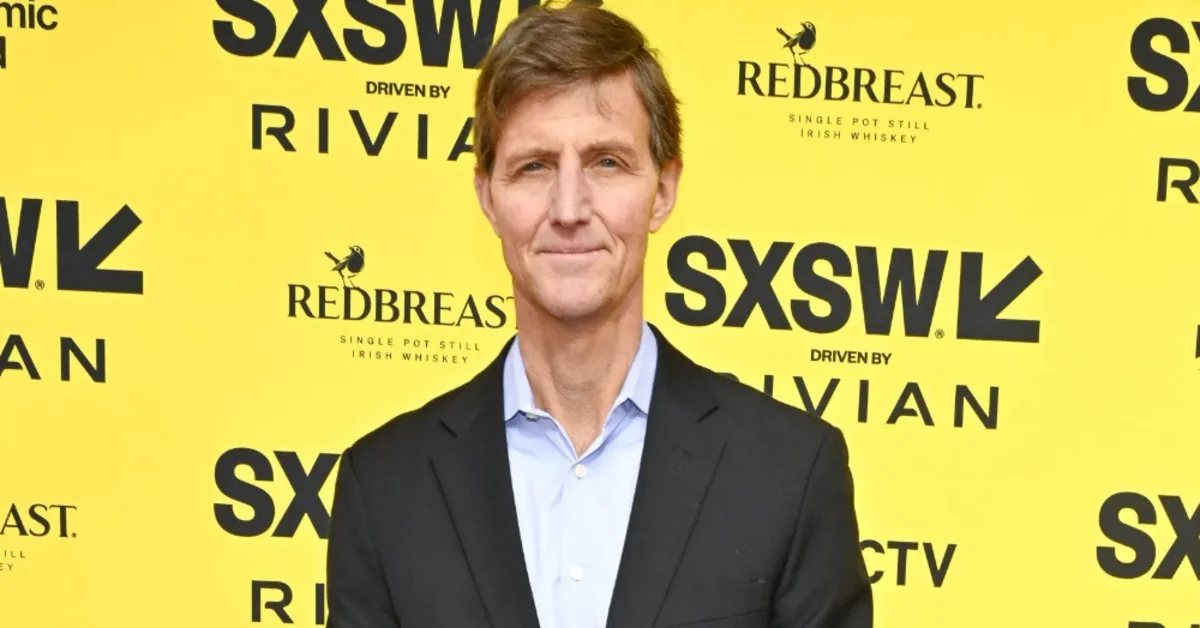

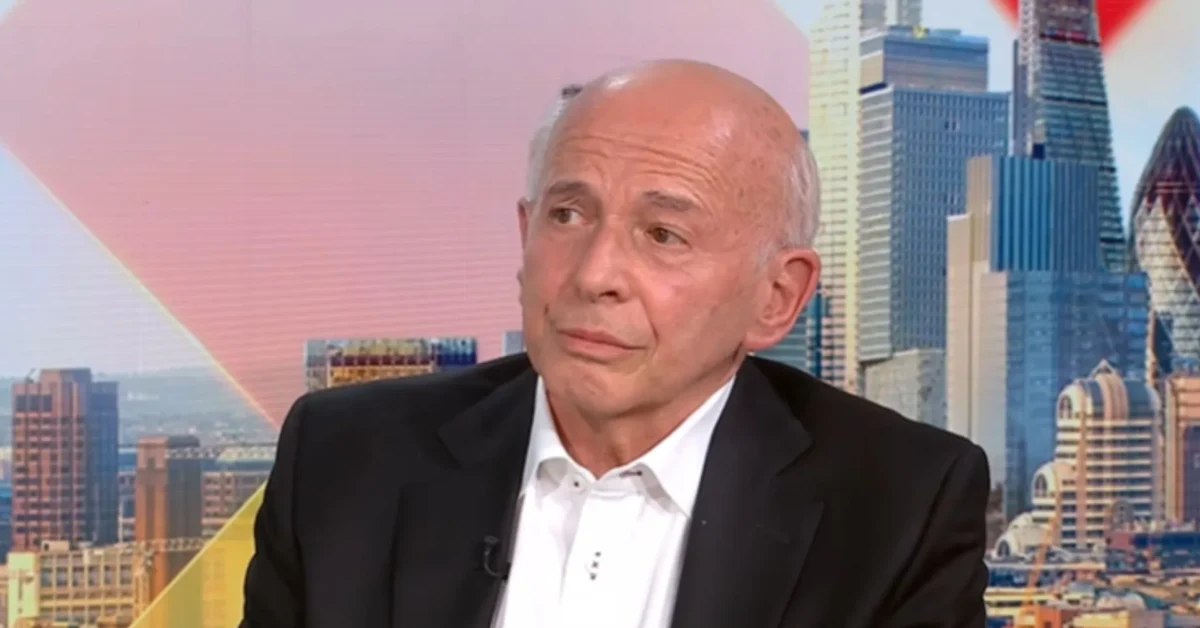
Retired U.S. Navy Rear Admiral Tim Gallaudet has accused the American government of running a deliberate, eight-decade-long campaign to discredit UFO reports and conceal what it knows about unidentified anomalous phenomena (UAP). The claim surfaced again this week during a wide-ranging interview on Sean Hannity’s podcast, where Gallaudet, a former acting administrator of the National Oceanic and Atmospheric Administration (NOAA), framed the deep ocean as the most plausible hiding place for objects that move between air and water without visible propulsion or sonic booms.
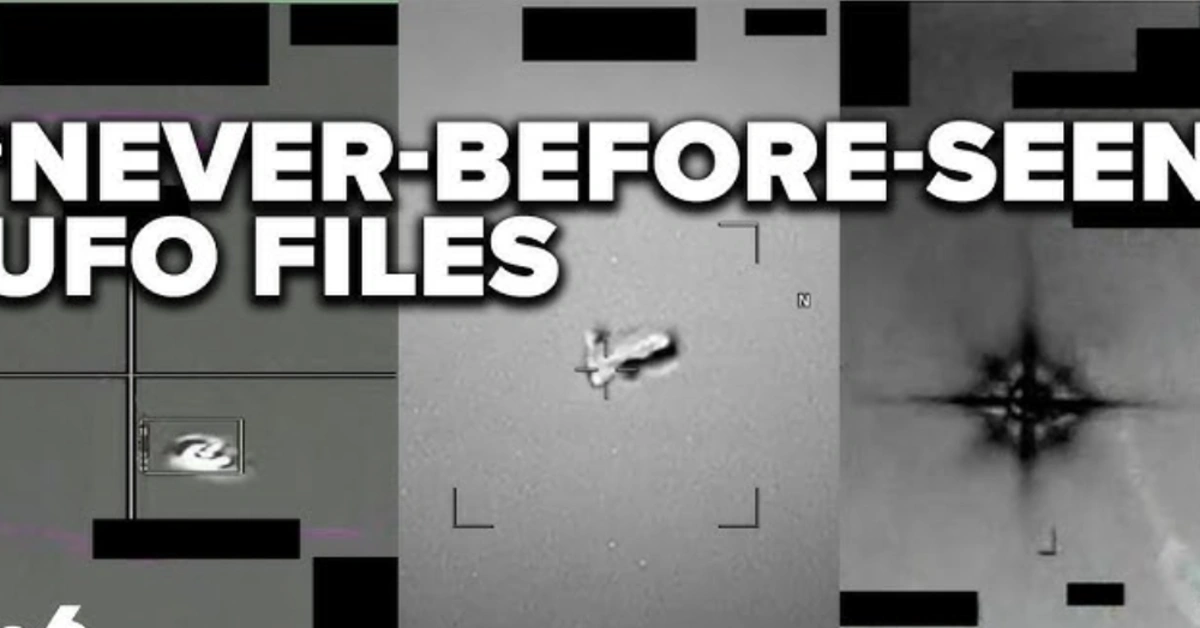
His remarks landed less than six months after the Pentagon began publishing declassified UAP files on a rolling basis, a process Gallaudet himself has characterized as an implicit admission that the government spent 80 years covering up material evidence.
The core claim is simple and sweeping: the U.S. government did not merely fail to investigate UFOs rigorously. According to Gallaudet, it actively built a system to stigmatize witnesses, bury sensor data, and treat the subject as a psyop rather than a safety or scientific matter. The timeline matters because Gallaudet is not a fringe podcaster. He served 32 years in the Navy, retired as the oceanographer of the Navy, ran NOAA in the first Trump administration, and now sits on a White House UAP Science Advisory Council reporting to the Office of the Director of National Intelligence. When a figure with that résumé repeats the phrase “80-year cover-up,” it moves from internet rumor to a credentialed allegation that demands scrutiny.
The 2015 Email That Gallaudet Says Vanished
Gallaudet’s evidentiary anchor is a January 2015 email he received while commanding the Naval Meteorology and Oceanography Command. The message came from the operations officer of Fleet Forces Command during a pre-deployment exercise off the U.S. East Coast involving the USS Theodore Roosevelt Carrier Strike Group. The subject line, according to his sworn congressional testimony, read in all capital letters: “URGENT SAFETY OF FLIGHT ISSUE.” The body warned of multiple near-midair collisions involving an object that exhibited flight and structural characteristics unlike anything in the U.S. arsenal. The email included a now-declassified video known publicly as the “Go Fast” footage. Gallaudet testified that the email was wiped from his server the next day and that the incident was never discussed in follow-up meetings with the F/A-18 pilots who captured the footage.
That disappearance is the seed of his disinformation thesis. Gallaudet told Congress he concluded the UAP information had been classified inside a special access program managed by an intelligence agency — a compartmented program that even a senior commander was not read into. In his 2024 opening statement, he said the over-classification of UAP intelligence is a “concerted effort designed to discredit UAP whistleblowers”. The Washington Examiner reported that Gallaudet called on Congress to force the Department of Defense’s All-domain Anomaly Resolution Office (AARO) to disclose UAP intelligence that affects national security, arguing that excessive secrecy has compromised the safety of military and civilian aviators.
The 1953 Robertson Panel and the Architecture of Ridicule
Gallaudet does not present the cover-up as a post-Roswell improvisation. He traces its lineage to the CIA’s 1953 Robertson Panel, a committee of scientists convened amid a wave of sightings over Washington, D.C. The panel concluded that UFOs posed no direct national-security threat but recommended a public-relations campaign to “debunk” the subject and reduce public interest. Declassified histories of the panel describe its recommendation as a domestic propaganda program designed to reduce public interest in UFOs through covert media assets. Gallaudet’s argument is that this 1953 playbook never ended. It evolved into a standing practice of ridicule, classification, and witness discrediting that shaped how every subsequent generation of pilots, radar operators, and intelligence officers handled anomalous sightings.
That historical frame is what gives the “80-year” figure its rhetorical force. Eighty years reaches back to the late 1940s, the dawn of the Cold War flying-saucer era and the early Air Force investigations that first normalized the idea that UFO reports were either misidentifications or Soviet psychological operations. Gallaudet’s claim is not that every individual official was lying. It is that the institutional default — debunk first, classify second, never confirm — was set in the early Cold War and never dismantled. The 2026 file releases, in his reading, are the first crack in that architecture rather than a voluntary act of transparency.
The 2026 File Drops and the Wind Farm Video Problem
The Pentagon’s first release under the Presidential Unsealing and Reporting System arrived on May 8, 2026, with 158 files posted to war.gov/ufo. The material included videos, photographs, audio, and documents spanning from the 1940s to recent years, compiled by the State Department, the Defense Department, NASA, the FBI, and diplomatic missions. Gallaudet appeared on CNN that day and picked file number 48 — a video of a spherical object weaving around a wind farm over the ocean — as the most significant item in the tranche. He said the object’s motion could not be explained by a drone or a helicopter and that it added to the body of evidence convincing him “we are not alone in the universe”.
Independent analysts dismantled the clip within hours. Mick West, writing in the Skeptical Inquirer, reported that Metabunk investigators geolocated the footage to the Yellow Sea off the coast of northern China and built a 3D simulation of the camera’s bank angle. Their conclusion: the object was most likely a balloon, its apparent weaving was an illusion produced by the moving camera, and the video was not evidence of non-human technology. The episode became a case study in the gap between credentialed advocacy and forensic verification. Gallaudet, West wrote, “no doubt believed what he was saying, but he got it wrong”.
That single misidentification does not disprove the broader cover-up allegation, but it does raise the evidentiary bar. If a former oceanographer of the Navy can present a windblown balloon as anomalous technology on national television, then the disclosure movement’s credibility problem is not only a government secrecy problem. It is also an analytical discipline problem. Gallaudet’s defenders argue that the episode proves the opposite point: the government released 158 files of ambiguous, heavily redacted material and called it disclosure, while the most consequential sensor data remains classified. The second tranche, released two weeks later, contained 64 files. The third added 72 files but only four videos. The fourth dropped to 40 files, and the fifth to 41 — a drip feed that Gallaudet told NewsNation risks backfiring on the administration if the public concludes it is being fed “nothing”.
Gallaudet vs. Kirkpatrick: The Disinformation Fight Inside the Disclosure Movement
The cover-up allegation has produced a secondary war inside the UAP community itself. In April 2026, Gallaudet publicly accused Sean Kirkpatrick, the former director of AARO, of running a disinformation campaign against UAP witnesses. The confrontation happened on stage at a National Capital Area Skeptics event, where Gallaudet called Kirkpatrick a “disinformation agent” to his face and accused AARO of blocking information releases and discrediting witnesses. Kirkpatrick has repeatedly denied finding evidence of alien technology or a government conspiracy, telling Congress and reporters that the best outcome of his tenure would have been discovering such evidence and that he never found it. He has separately dismissed the new White House advisory council as “laughable” and “clearly meant to distract and push fringe theory”.
The feud matters for the business of disclosure because it splits the credentialed camp. One faction, represented by Gallaudet and the advisory council, argues that the government’s secrecy apparatus is the primary obstacle and that the 2026 releases are a partial concession forced by congressional pressure and presidential politics. The other faction, represented by Kirkpatrick and skeptical analysts, argues that the disclosure movement has substituted anecdote and advocacy for forensic rigor, and that the “cover-up” framing protects weak claims from falsification. Both sides agree on one operational fact: the U.S. government has released thousands of pages of UAP material in 2026, and none of it yet constitutes material proof of non-human technology.
Agency and Corporate Architecture: Who Actually Controls the Files
The institutional map behind Gallaudet’s claim is more fragmented than the phrase “the government” suggests. AARO sits inside the Department of Defense and leads the formal tracking of unexplained phenomena. The UAP Science Advisory Council, chaired by Harvard astrophysicist Avi Loeb, reports to the Office of the Director of National Intelligence and includes Gallaudet, Stanford pathologist Garry Nolan, and science writer Michael Shermer. The file releases are hosted by the Department of War — the renamed Defense Department — under a presidential directive, with NASA and the State Department contributing records. Gallaudet’s own corporate footprint is Ocean STL Consulting, a private advisory firm he leads, alongside roles with the Galileo Project, Americans for Safe Aerospace, and the SOL Foundation.
That dispersion is exactly what a cover-up would require, according to Gallaudet’s logic: no single agency owns the full picture, classification compartments keep senior officials outside the loop, and Congress lacks the clearance architecture to compel disclosure. It is also what a bureaucratic muddle would look like, according to skeptics: multiple agencies with overlapping mandates, inconsistent classification standards, and no central authority willing to certify a definitive conclusion. The distinction between deliberate concealment and institutional incapacity is the central unresolved question in the entire disclosure debate, and neither the 2026 releases nor Gallaudet’s testimony has settled it.
Safety, Sensors, and the Business Case for Transparency
Strip away the extraterrestrial question and Gallaudet’s argument still carries a concrete operational claim: UAP encounters pose a flight-safety risk, and the classification of sensor data prevents aviation authorities from managing that risk. His 2015 email described multiple near-midair collisions serious enough that commanders discussed shutting down a carrier exercise. He has testified that excessive secrecy “compromised the safety of both military and civilian aviators” and eroded trust in institutions. That framing converts UAP disclosure from a science-fiction curiosity into an aviation-safety and insurance-risk issue. If military pilots are routinely encountering objects that cannot be identified or reproduced, the data belongs in safety-review channels, not only in classified compartments.
The commercial dimension is equally tangible. Defense contractors, space-launch firms, and sensor manufacturers all have a financial interest in the standards that emerge from UAP reporting. A government that treats every anomalous sensor return as a potential security compartment creates incentives for contractors to over-classify their own data. A government that establishes a clearer reporting pipeline creates incentives for standardized, shareable telemetry. Gallaudet’s advisory-council seat gives him a formal channel to push the second model, but the first model has eight decades of institutional inertia behind it. The 2026 file releases have generated global media coverage without producing a single confirmed artifact, which means the disclosure economy — podcasts, documentaries, books, conferences, and subscription newsletters — is currently outpacing the evidentiary economy by a wide margin.
You May Also Like:

View all articles about
Public, Fan, and Market Reaction: Belief Without Proof
The public response reflects that imbalance. On Reddit’s UAP forums, Gallaudet is treated as a credible insider by believers and as a “talking head with zero proof” by skeptics within the same thread. His claim that he knows people who worked in crash-retrieval programs draws a predictable split: one commenter calls it confirmation, another notes that the people with direct knowledge never speak publicly.
His 2026 statement that objects “not of our origin” are operating in airspace and water space “with impunity” was reported by the Seattle Times and the New York Times as a serious claim from a council member, while skeptical outlets treated it as advocacy dressed as testimony. The market for disclosure content has never been larger, and the tolerance for unverified assertion has never been lower. Gallaudet’s “80-year cover-up” line works as a headline because it compresses a complex institutional history into a moral binary. Whether it survives contact with the next tranche of files is a different question.
For VVIPTimes, the story is not whether Gallaudet is right that the government concealed something for 80 years. The story is that a retired rear admiral with a White House advisory seat has made that allegation on the record, attached it to a specific 2015 email, a specific 1953 CIA panel, and a specific 2026 file-release process, and dared the agencies to prove him wrong with unredacted data. That is a testable claim, and the next release cycle will either strengthen it or expose it.

























Leave a Reply