

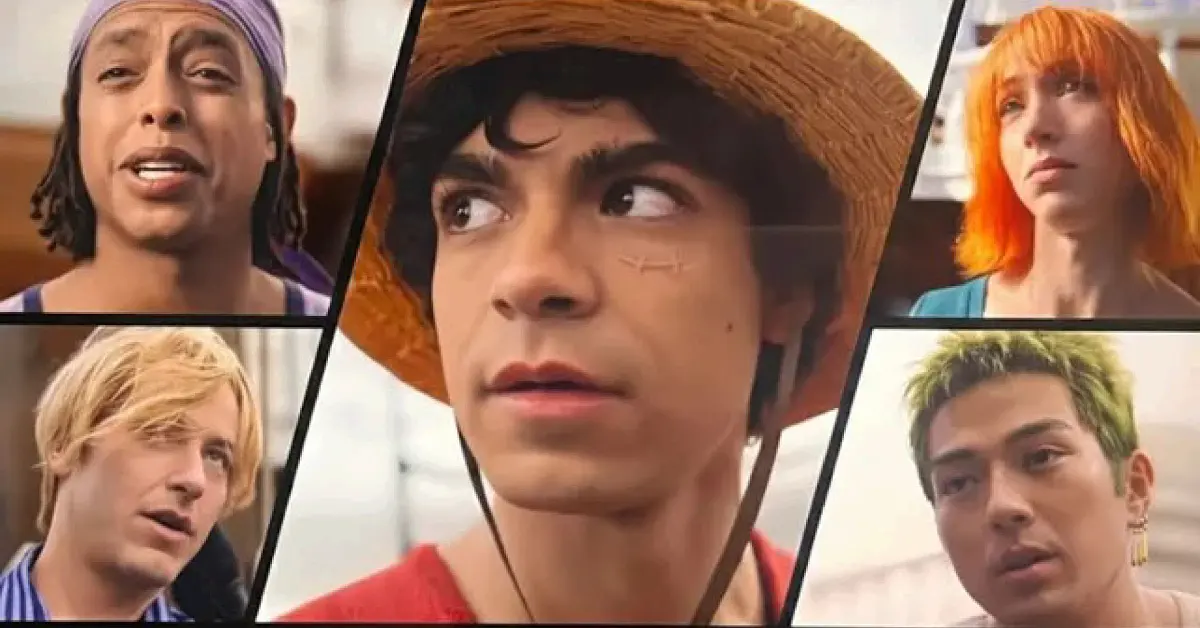
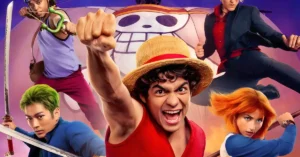
The second season of Netflix’s One Piece live-action has finally arrived, and it’s already clear that the production team isn’t afraid to shake things up. While the first season earned massive praise for breaking the “live-action anime curse,” it also made some notable changes—like introducing Garp way ahead of schedule. Season 2 follows suit, taking Eiichiro Oda’s source material and remixing it in ways that serve the new medium.
Some changes are practical. Some are budgetary. Others? They’re just for fun. But with Oda himself giving the team his blessing to “assimilate the manga and redo it in their own way,” these shifts feel intentional rather than careless .
Here’s a breakdown of the biggest differences between the One Piece live-action season 2 and the original manga storyline.
The Early Reveal of Roger’s Son
The season premiere takes us to Loguetown, where we witness the execution of Gold Roger through flashback. But here’s the twist: the show immediately reveals Roger’s final request for Garp to protect his infant son.
In the manga, this secret doesn’t surface until the Marineford arc, nearly 450 episodes into the story . The live-action reveals right away that the baby is Ace, though new viewers might initially assume it’s Luffy. This change creates dramatic irony for newcomers while giving longtime fans a fresh perspective on Garp’s complicated history.
Bartolomeo Shows Up Way Too Early
One of the most delightful surprises in episode one is the appearance of Bartolomeo, Luffy’s future superfan with the green pompadour and even greener personality. In Loguetown, he tries to pickpocket Nami, fails spectacularly, and ends up getting inspired by Luffy instead.
Manga readers know Bartolomeo doesn’t actually debut until the Dressrosa arc (episode 629 in the anime) . His presence here is a clever nod to the future, establishing his origin as a witness to Luffy’s Loguetown execution moment without needing a lengthy flashback later. It’s fan service done right.
Sabo Appears in Loguetown (And He’s Not a Kid)
This one caught even hardcore fans off guard. During the iconic scene where Monkey D. Dragon saves Luffy from Smoker, the live-action adds an extra figure lurking in the shadows: Sabo, fully grown and very much present .
In the manga, Sabo isn’t revealed to be alive until much later, and he definitely wasn’t standing behind Dragon in Loguetown. This early introduction suggests the show is setting up Revolutionary Army threads far in advance, likely to streamline future seasons and give Sabo more room to breathe as a character.
Brook Gets a Flashback Cameo
Speaking of characters appearing ahead of schedule, Brook technically shows up in season 2—just not as a skeleton. During the Laboon storyline, we see flashbacks of the Rumbar Pirates performing for the young whale, and there he is: Brook, alive and well, playing music with his original crew .
The manga withholds Brook’s introduction until Thriller Bark, roughly 300 chapters after Reverse Mountain. The emotional payoff of Brook’s connection to Laboon is one of the series’ most poignant moments, and seeding it now means the eventual reveal will hit differently—but hopefully just as hard.
No Karoo (And That Hurts)
Here’s a change nobody wanted: Karoo, Princess Vivi’s loyal super duck, is missing in action. The giant rideable bird gets a brief mention but never appears on screen .
The likely culprit is budget. Animating a fully CG character with significant screen time across multiple episodes adds up fast. Still, his absence leaves a hole in Vivi’s dynamic, especially during the Whiskey Peak and Little Garden segments. The good news? He’s name-dropped, which leaves the door open for a potential season 3 appearance if Netflix loosens the purse strings.
Luffy Soothes Laboon With Song (Not Violence)
The Laboon scene plays out very differently in live-action. In the manga, Luffy stabs the Going Merry’s mast into the whale’s head to mark their territory and promise to return. It’s aggressive, absurd, and peak early One Piece.
In the Netflix version, Luffy sings Laboon the same song the Rumbar Pirates used to perform . It’s softer, sweeter, and arguably more emotional. While some fans miss the chaotic energy of the original, this change emphasizes Luffy’s empathy and makes the moment accessible for viewers who might find stabbing a whale… off-putting.
Smoker and Tashigi Get an Original Subplot
The manga keeps Smoker and Tashigi relatively focused on chasing the Straw Hats. Season 2 gives them something extra: a full-blown investigation into Baroque Works that includes fighting Mr. 5 and Miss Valentine at a Marine outpost .
This subplot serves multiple purposes. It keeps Smoker and Tashigi active throughout the season instead of having them disappear for episodes at a time. It also builds out the Baroque Works threat level before Alabasta. Plus, watching Tashigi get real combat experience against Devil Fruit users sets up her character growth nicely.
The Missing Luffy vs. Zoro Fight
This one stings for longtime fans. During the Whiskey Peak arc in the manga, Zoro single-handedly defeats 100 Baroque Works agents while Luffy sleeps. When Luffy wakes up, he misunderstands the situation and attacks Zoro, leading to a brief but memorable clash between the crewmates.
The live-action cuts the fight entirely . Zoro still gets his 100-man battle, but Luffy never confronts him. While the show likely trimmed this to save runtime, it removes a moment that showed the crew’s early dynamic—where trust isn’t automatic and misunderstandings happen. Instead, we get Zoro hallucinating Mihawk taunting him, which is cool but not the same.
Chopper’s Secret Stays Secret
The season finale sees Chopper officially join the Straw Hats. In his final scene, he shows the crew a jar filled with yellow spheres—his “secret”—but doesn’t explain what they do .
Manga readers recognize these immediately as Rumble Balls, the drugs that let Chopper access extra transformations. In the source material, he uses them during the Drum Island fight against Wapol. Here, he only uses his three base forms. The change likely saves the Rumble Ball reveal for a bigger moment in season 3, when Chopper will need every advantage he can get.
Crocus Lives on Land, Not Inside a Whale
This is the change that’s sparked the most debate online. In the manga, Crocus literally lives inside Laboon’s stomach, maintaining a small home in the whale’s interior. It’s bizarre, surreal, and perfectly One Piece.
The live-action moves Crocus to a lighthouse overlooking the ocean . He watches over Laboon from the shore instead of sharing the whale’s internal space. While this is more visually grounded and logistically simpler, it loses some of the magical absurdity that defines the series. That said, the emotional core remains intact: Crocus still waits, still hopes, and still keeps the Rumbar Pirates’ promise alive.
Wapol Creates Metal Soldiers
The Drum Island arc introduces a new threat in the live-action: Wapol uses his Munch-Munch Fruit powers to create metallic soldiers that attack the villagers . These enemies don’t exist in the manga.
This change gives Zoro, Usopp, and Dalton something to fight while Luffy and Sanji handle the main confrontation. It also raises the stakes for the finale, transforming Wapol from a petty tyrant into a genuine menace with an army at his back.
Related:


What It All Means
Not every change works perfectly. Karoo’s absence hurts. The missing Luffy vs. Zoro fight disappoints. But the overarching approach remains consistent: the live-action team understands what matters about One Piece.
Characters retain their essence. Emotional beats land. The world feels lived-in and loved. When changes happen, they’re rarely random—they streamline the narrative, set up future arcs, or work around the realities of live-action production.
Eiichiro Oda himself encouraged this mindset, telling the team to “express themselves instead of copying and pasting the previous work” . With his blessing and continued involvement, these alterations feel less like compromises and more like creative choices.
Season 2 proves that One Piece can survive adaptation. It can even thrive. The spirit of the Grand Line? Still intact.
What do you think of the changes in season 2? Which ones worked for you, and which missed the mark? Drop your thoughts in the comments—we want to hear from fellow nakama.
Also Read: “He’s a Spider Pretending to Be a Person”: Why Spider-Noir’s Ben Reilly Is Nothing Like Peter Parker




















Leave a Reply