
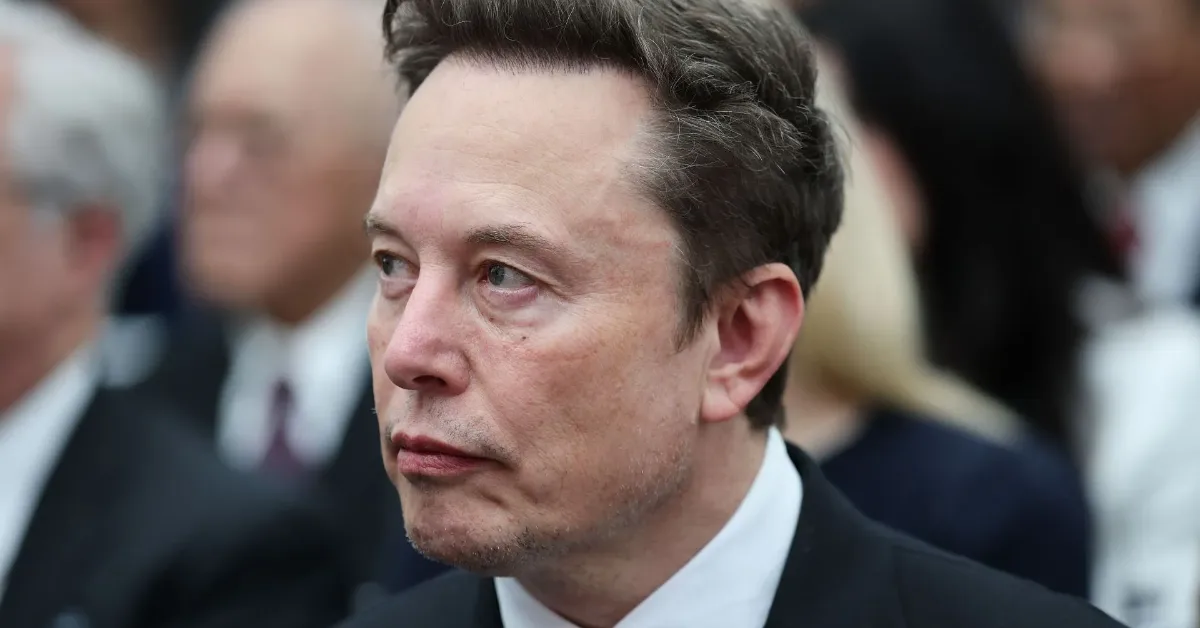

Elon Musk has publicly agreed with a 2015 prediction from Google co-founder Larry Page that humans will be exploring the galaxy with self-replicating spacecraft by the end of the century. The exchange resurfaced through an interview with Microsoft AI CEO Mustafa Suleyman on October 29, 2026, and Musk responded on X the same day. His verdict: Page may have been right all along, and if the prediction comes true, human civilization would be “winning wondrously.” The moment has drawn attention because Musk and Page are not casual acquaintances. They were once close friends who split over how artificial intelligence should be handled, and the Von Neumann probe idea sits directly on that fault line.
The 2015 Lunch That Started It All
Suleyman told the story during an appearance on “The Builders with Walter Isaacson,” a podcast interview recorded on October 12, 2026, and released on October 29, 2026. The setting was a 2015 meeting of the ethics and safety board created after Google acquired DeepMind. Suleyman, a DeepMind co-founder, said the acquisition agreement required an independent ethics board, and Musk was chosen as one of three outside members.
During a lunch break at SpaceX, Suleyman sat next to Page. The conversation turned to AI, species survival, and what Page wanted to do with superintelligence.
“And he said, you know, I think that what you don’t understand, Mustafa, is that by the end of the century, I’m going to be exploring the galaxies at the head of a von Neumann probe.” — Mustafa Suleyman, recalling Larry Page on The Builders
Suleyman also recalled that Page viewed him with suspicion during the lunch. “He was like, ‘You know, you’re one of those speciesists,’” Suleyman said. The term referred to people who prioritize humans over other forms of intelligence. Page had used a similar label against Musk in earlier arguments about AI safety, according to accounts of their falling out.
Musk’s Post on X
Musk shared a clip of Suleyman’s interview on October 29, 2026, and added his own comment.
“Our civilization would be winning wondrously if we are exploring the galaxy with Von Neumann probes by 2100! Larry Page might be right. He has correctly predicted many things.” — Elon Musk on X
The post did not explain what “winning” means in practical terms. It also did not address the older disagreement between the two men over whether advanced AI poses a risk to human survival. Page has argued that digital intelligence replacing biological intelligence could be a natural step in evolution. Musk has spent years warning that uncontrolled AI could end humanity. The Von Neumann probe prediction is a rare point where their views overlap, at least on the surface.
The clip Musk shared came from Fireside Alpha, an account that posted the Suleyman interview segment on October 29, 2026. The post drew attention because it placed the Page prediction and the Musk reaction side by side.
What Exactly Is a Von Neumann Probe
A Von Neumann probe is a hypothetical spacecraft designed to do something current robots cannot: make copies of itself using materials found in space. The idea is named after John von Neumann, the mathematician and physicist who studied self-replicating machines in the mid-20th century.
Suleyman described the concept in plain terms during the interview.
“A von Neumann probe is a kind of self-propelling kind of robot that is able to gather energy from space as it’s careening through the light years.” — Mustafa Suleyman on The Builders
The practical version works like this. A probe arrives at a star system, mines asteroids or planets for raw materials, builds a factory, and produces more probes. Those new probes travel to other stars and repeat the process. Each generation spreads farther from Earth without needing a new launch from home. The concept appears in scientific literature and science fiction, and it has been studied as a way to explore the Milky Way without sending humans on multi-generational journeys.
A probe that replicates once per star system and travels at just 1 percent of the speed of light could visit every star in the Milky Way within roughly 10 million years, according to theoretical estimates published in 2026. That is a long time by human standards but a short time on a geological scale.
The Distances That Make It Hard
The idea is simple to describe and extremely difficult to build. NASA figures show the size of the problem.
Proxima Centauri, the closest star beyond the Sun, sits about 4.24 light-years away, or roughly 40 trillion kilometres. Voyager 1, launched in 1977, travels at about 61,000 kilometres per hour. At that speed, reaching Proxima Centauri would take more than 70,000 years.
The Milky Way spans about 100,000 light-years. The Andromeda galaxy is around 2.5 million light-years away. A probe that could cross those distances would need advances in autonomous manufacturing, robotics, propulsion, and artificial intelligence that do not exist today. The technology remains theoretical.
Musk’s Own Version: Optimus and Solar Panels
Musk has not waited for a dedicated interstellar probe program. He has spent 2026 arguing that Tesla’s Optimus humanoid robot, paired with photovoltaic solar technology, could become the first Von Neumann probe.
“Optimus+PV will be the first Von Neumann probe, a machine fully capable of replicating itself using raw materials found in space.” — Elon Musk on X, March 21, 2026
He repeated the claim in February 2026, saying Optimus would be “the first Von Neumann machine, capable of building civilization by itself on any viable planet.” In June 2026, he wrote that “a legion of Optimi combined with solar panels will constitute the first Von Neumann probe.” He has also said the plural of Optimus is “Optimi” and described factory targets of one million units per year at Fremont, with a long-term goal of hundreds of millions annually.
The March 2026 posts also included a timeline estimate. Through exponential growth, even at 10 percent of the speed of light, a wave of self-replicating probes could cover the Milky Way in roughly 500,000 years, according to the figures shared alongside Musk’s claim. That estimate is separate from Page’s 2100 target and reflects the longer end of theoretical projections.
A Friendship That Fractured Over AI
The 2015 lunch did not happen in a vacuum. Musk and Page had been close for years. Musk sometimes stayed at Page’s home, and the two talked about technology late into the night. Their views on AI began to separate in 2015, starting with a heated argument at Musk’s 44th birthday party in July.
Page described a future where digital intelligence competes with biological intelligence and the better one wins. Musk said that outcome would mean humanity is doomed. Page called Musk a “speciesist” during that argument, according to multiple accounts. The August 14, 2015, DeepMind ethics board meeting at SpaceX was their next face-to-face encounter, and it produced the lunch exchange Suleyman later described.
Musk went on to co-found OpenAI in December 2015, partly out of frustration that Google was not treating AI risk seriously enough. His relationship with Page never recovered. The Von Neumann probe comment from 2026 is the latest sign that the two men still track each other’s thinking, even after years of public distance.
Where to Hear the Full Interview
The Mustafa Suleyman episode of “The Builders with Walter Isaacson” was released on October 29, 2026, and is available on major podcast platforms, including Apple Podcasts, Spotify, and iHeart. The interview runs about 52 minutes and covers AI safety, Suleyman’s disagreements with Anthropic, and his account of the Page lunch at SpaceX.
Viewers in the United States, United Kingdom, Canada, Australia, India, and other markets can stream the episode through the podcast platform of their choice. The clip Musk shared on X remains available on his account.
Also Read: Elon Musk Shows Off Flying Tesla Roadster; Internet Asks Where The Flying Actually Is
For more straight explanations of the tech and space stories driving the conversation, keep reading VvipTimes.
































Leave a Reply