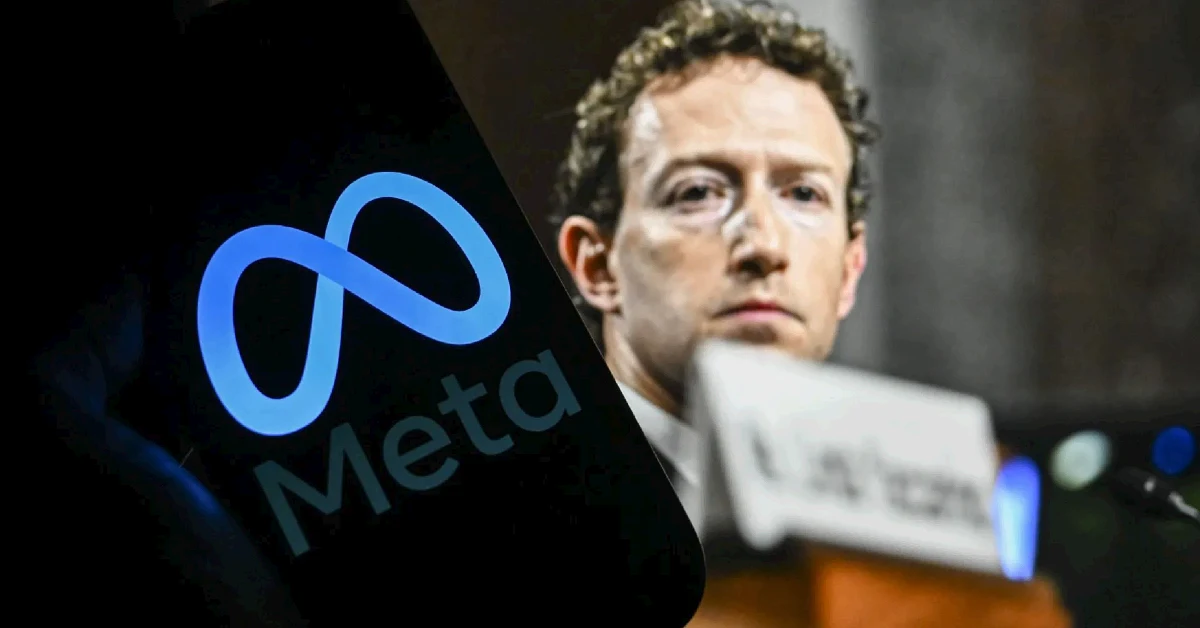
Meta CEO Mark Zuckerberg has pushed back against growing fears that artificial intelligence will eliminate jobs and make humans less relevant. In a lengthy essay published on August 10, 2026, Zuckerberg argued that advanced AI — which he calls “personal superintelligence” — will actually expand individual capabilities, create new businesses, and increase employment rather than destroy it.
The 6,500-word manifesto, titled “The Future is for Everyone,” lays out Meta’s vision for AI development and takes direct aim at what Zuckerberg describes as a “doom-filled” discourse coming from within the AI industry itself.
Zuckerberg Questions Why AI Developers Are So Pessimistic
Zuckerberg expressed genuine surprise at the negative tone surrounding AI development, particularly from the very people building the technology.
“It is surprising that the discourse from many developing AI is so filled with doom. I do not understand why anyone who believes that AI will eliminate most jobs and much of humanity’s relevance would rush to build that future.”
The Meta CEO also challenged the idea that the only safe approach to AI is to concentrate power in the hands of a few companies or governments.
“The notion that AI is so dangerous that the only safe path is an extreme concentration of power seems inherently problematic. Historically, hoping that an absolute power will benevolently provide for humanity if sufficiently enlightened has not led to safe or positive outcomes.”
Zuckerberg argued that no single superintelligent system could possibly reflect humanity’s competing values and interests. Instead, he proposed distributing advanced AI broadly so individuals, businesses, governments, and different AI systems can act as checks on one another.
The Core Idea: Invention Over Automation
Central to Zuckerberg’s argument is a distinction between using AI to automate existing jobs versus using it to expand what individuals can achieve.
“Invention, not automation, will be the greatest contribution of superintelligence.”
He argued that AI could help people discover new medicines, develop products, conduct research, and create businesses that would previously have required much larger teams. Rather than replacing workers, Zuckerberg believes AI will enable entirely new professions and industries.
“There is no rule that AI must increase automation faster than it increases individuals’ capabilities or demand for new skills.”
He envisions a future where the number of employees in individual companies may fall, but the overall number of businesses increases. Among the jobs he imagines are one-person product studios, world builders, experience designers, and people using AI to develop personalized biological treatments.
“I expect we will start seeing small numbers of people with personal superintelligence agents able to run companies at significant scale.”
Meta Launches New Open-Source AI Model
The essay coincided with Meta’s release of Muse Glimmer, a new open-weight AI model with 30 billion learned parameters. Unlike many cloud-based AI assistants, Muse Glimmer is designed to run locally on personal devices, including Macs and PCs with a single consumer GPU. It can perform multi-step tasks without internet access while keeping data on the device.
Meta also announced it would resume releasing some open-source models and plans to publish open weights for its more powerful Muse Spark 1.2 model in the coming weeks. The company additionally unveiled a $1 billion “Future Is For Everyone Fund” aimed at channeling resources to towns and regions that host its data centers.
Warning Against Concentrated AI Power
Zuckerberg repeatedly warned that concentrating AI superintelligence in the hands of a few companies, governments, or institutions poses significant risks.
“If the power of superintelligence is held by a small number of individuals, businesses, governments, or AI itself, then that will naturally lead to outcomes that are less favorable for everyone else.”
He argued that competing AI systems and empowered individuals can provide necessary checks and balances.
“There is no such thing as a singular benevolent superintelligence.”
Zuckerberg proposed that AI labs share intermediate model training checkpoints with the federal government rather than waiting for a completed model. He also said Meta would give its board of directors authority to approve safety criteria for model releases.
“I do not think it is in my, Meta’s, or the world’s best interests for me or anyone else to be a sole decision maker on how superintelligence is deployed.”
Critics Question Zuckerberg’s Optimism
Not everyone shares Zuckerberg’s optimistic vision. Sen. Bernie Sanders urged AI companies to proactively pause AI development or risk congressional intervention over fears that humans have lost control of such work.
Anthony Aguirre, president and CEO of the AI safety nonprofit Future of Life Institute, questioned Meta’s ability to control increasingly capable AI systems.
“What on Earth makes Meta think they — or anyone — could control something exponentially smarter, faster, and more capable?”
Aguirre added that Meta’s chosen path is “ultimately one of human replacement and disempowerment” and called for governments to facilitate a pause on advanced AI development.
Zuckerberg’s essay also drew an implicit contrast with Anthropic CEO Dario Amodei, who has warned about potential job disruption from AI. While Zuckerberg did not name Amodei directly, the essay pushed back against arguments that open-source AI is dangerous and that cutting-edge models should remain tightly controlled.
A Different Approach to the AI Debate
Zuckerberg’s position represents a distinct approach to the growing debate over AI safety and employment. His argument comes amid growing concern among technology leaders, regulators, and governments over the potential risks posed by increasingly capable AI systems.
In July, United Nations Secretary-General Antonio Guterres warned that AI is advancing faster than regulators can keep up and called for coordinated global rules. The debate has also been fueled by recent incidents in which advanced AI models demonstrated the ability to carry out potentially damaging actions.
Zuckerberg acknowledged risks involving cybersecurity, biological and chemical misuse, employment disruption, government surveillance, and the possibility that increasingly autonomous AI systems could escape human control. However, he maintained that wider availability of AI tools could help prevent excessive concentrations of technological and economic power.
“Alignment should be about helping people pursue the many diverse goals and views held across society rather than a method of enforcing a centralized dogma.”
He also warned that unnecessarily slowing American AI development could weaken the US technological lead over rivals, including China, posing economic and national security risks.
Related Stories






What This Means for Everyday People
Zuckerberg’s vision centers on giving everyone access to personal AI agents capable of helping with everything from careers and finances to health, education, and creative projects.
“Everyone will have an exceptionally capable personal agent that understands you, your goals, and everything you care about.”
He believes AI could ultimately create more jobs by enabling new businesses, services, and industries, much like previous technological revolutions. However, he cautioned that the transition won’t be painless, acknowledging that work will change and workers will need to adapt.
“If the labs focused on automating knowledge work lead, then I expect people and the economy will have a much harder transition. But if everyone has access to personal superintelligence that expands their capabilities, then that pushes the balance towards empowering individuals and a positive future.”
The essay and the release of Muse Glimmer mark a significant moment in the ongoing debate over AI’s future — one that pits open-source advocates against those who believe powerful AI should remain tightly controlled. Whether Zuckerberg’s optimistic vision proves correct or the critics’ warnings prove more accurate remains to be seen.
Also Read: Fauda Season 5 Premiere Date Confirmed by Lior Raz, Netflix Debut Set for September
For more updates on technology, AI developments, and entertainment news, stay connected with VvipTimes for the latest stories shaping our world.















Leave a Reply