

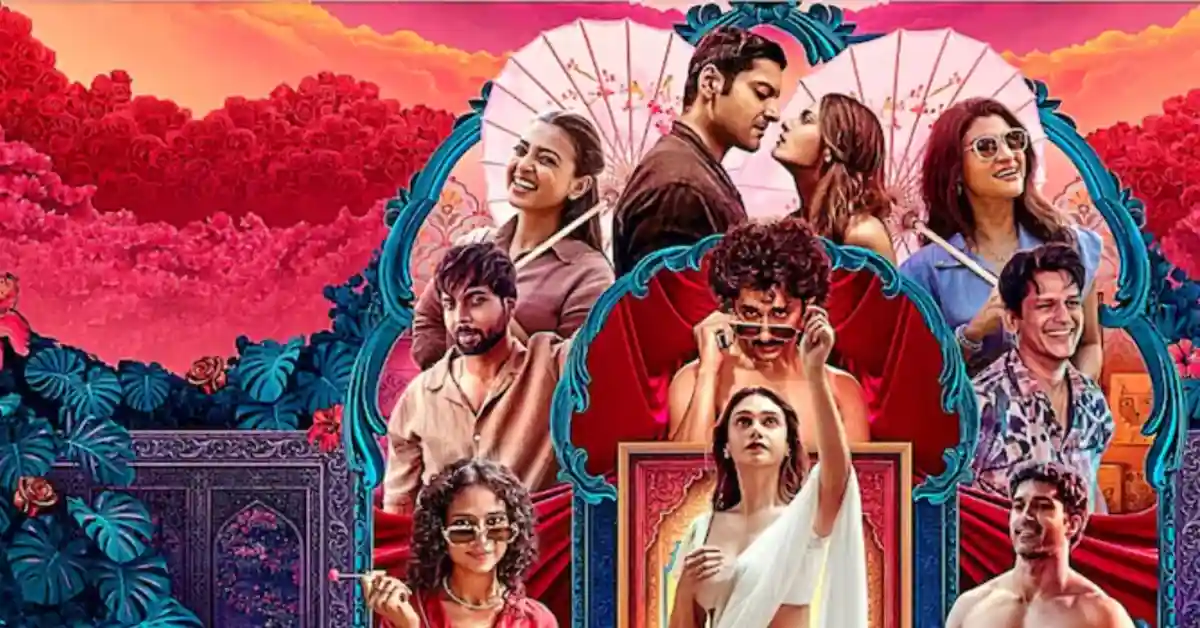
Lust Stories 3 has arrived on Netflix, bringing four new short films from four of India’s most distinctive directors. The anthology, which premiered on September 18, 2026, continues the franchise’s tradition of exploring desire, intimacy, and the complicated space between what people want and what they allow themselves to pursue.
This time, Vikramaditya Motwane, Kiran Rao, Shakun Batra, and Vishal Bhardwaj each take a turn behind the camera, working with an ensemble cast that includes Konkona Sen Sharma, Radhika Apte, Aditi Rao Hydari, Siddharth, Ali Fazal, Radhika Madan, Vijay Varma, and newcomers Gurfateh Pirzada and Sana Thampi. The result is an uneven but frequently engaging collection that finds its strongest voice in the quietest of its four stories.
What Lust Stories 3 Is Really About
The Lust Stories franchise has never been only about sex. From its first edition in 2018, which earned an International Emmy nomination, the anthology has used physical desire as a doorway into larger questions about marriage, loneliness, power, and the ways people negotiate their own worth inside relationships. The third instalment continues that project, but with a noticeable shift.
Where earlier stories often followed a clear arc of liberation, the new segments are more interested in what happens when intimacy becomes a source of confusion rather than clarity. Radhika Apte and Konkona Sen Sharma return to the franchise, joined by a cast that Netflix describes as “some of the finest contemporary talent” working in Indian cinema today.
Vikramaditya Motwane’s Segment: Marriage, Boredom, and a Dangerous Idea
The opening story, directed by Vikramaditya Motwane, follows two married couples living in Kandivali, a middle-class neighbourhood in Mumbai. Paddy (Radhika Apte) and Shona (Konkona Sen Sharma) are close friends who have grown frustrated with the lack of intimacy in their marriages. Their husbands, Hemu (Vijay Varma) and Debu (Abhishek Banerjee), are decent men who have settled into comfortable routines of mobile phones, fitness, and emotional distance.
Inspired by the romantic dynamics they watch in Korean dramas, the women begin to entertain an unconventional solution: swapping partners. The idea starts as a joke, but it quickly exposes deeper insecurities and resentments. Motwane handles the material with a mix of humour and empathy, refusing to turn the women’s frustration into melodrama.
The segment’s strength lies in its performances. Konkona Sen Sharma and Radhika Apte bring a lived-in familiarity to their friendship, while Vijay Varma steals several scenes with a quietly confident turn as a man who is more aware of his wife’s unhappiness than he lets on. The segment’s ending, however, feels rushed, and it retreats into a conventional resolution just when it had the chance to say something more uncomfortable.
Kiran Rao’s Segment: A Mumbai Story of Survival and Deception
Kiran Rao’s contribution shifts the tone entirely. Set in the bustling, aspirational Mumbai of people who arrive with big dreams and limited means, the story follows Karan (Gurfateh Pirzada), a pizza delivery rider who also runs a side business selling drugs, and Lisa (Sana Thampi), a nail artist trying to build a life for herself. When Karan’s twin brother enters the picture, the story becomes a game of attraction, manipulation, and mistaken identity.
Rao brings a distinct visual energy to her segment, and Gurfateh Pirzada handles the challenge of playing dual roles with confidence. Sana Thampi, making her acting debut, holds her own opposite him. The problem is that the story leans too heavily on thriller tropes and a late twist, leaving little room for the emotional depth that the premise promised. Desire here is tangled up with money, survival, and the need to escape the city’s relentless demands, but the segment never quite digs into those ideas with the seriousness they deserve.
Shakun Batra’s Segment: The Most Emotionally Intense Chapter
Shakun Batra’s story is the one that comes closest to capturing what the franchise does best. Radhika Madan and Ali Fazal play Saili and Varun, a couple whose marriage is collapsing under the weight of inherited expectations and an inability to communicate outside the bedroom. Their physical relationship has become the only language they have left, a space where they can express frustration, longing, and hurt without ever having to explain it.
Batra captures the suffocating texture of a relationship that has become a battlefield. The intimate scenes between Madan and Fazal are carefully constructed, showing a rare quiet where the noise of their arguments fades away. The segment’s weakness is that it makes walking away from a marriage look simpler than it usually is in Indian social reality. Still, Batra excels at showing how painful ordinary relationship decay can be, and the segment benefits from two performances that feel raw and unguarded.
Vishal Bhardwaj’s Segment: Desire as a Forbidden Story
The final story, directed by Vishal Bhardwaj, is set in Hyderabad in 1987. Aditi Rao Hydari plays a part-time teacher who is married to a hakim (Siddharth), a traditional physician whose approach to intimacy is perfunctory and detached. Their Friday night routine is a source of quiet disappointment for her, and she begins to pour her unspoken desires into an erotic novel that she writes in secret.
Bhardwaj builds a rich period atmosphere, drenched in reds and golds, and he gives Aditi Rao Hydari a role that allows her to move between repression and fantasy. Siddharth, her real-life husband, appears in dream sequences as a more attentive and physically expressive version of her husband. The segment is the longest of the four, and at times it feels stretched, but it also has the most to say about the distance between a woman’s inner life and the life she is expected to live. Gajraj Rao delivers a memorable supporting performance as a father-in-law who quietly understands more than he lets on.
Performances That Carry the Anthology
Across all four segments, the acting is generally strong. Konkona Sen Sharma and Radhika Apte are the standout performers, bringing humour and frustration to their roles without overplaying either. Vijay Varma continues to demonstrate why he is one of the most reliable actors working in Hindi cinema, finding small moments of truth in a character who could easily have been a punchline. Ali Fazal and Radhika Madan bring an intensity to their segment that is missing from the others. Aditi Rao Hydari is compelling in a role that requires her to express longing through restraint, and Sana Thampi makes a promising debut.
The weaker links are the male characters in Motwane’s segment, who are given less complexity than their female counterparts, and the supporting cast in Rao’s story, where the writing does not always match the ambition of the premise.
How Lust Stories 3 Compares to Earlier Editions
The first Lust Stories, released in 2018, was a cultural event. It used the word “lust” in its title at a time when Indian cinema was still deeply uncomfortable with female desire, and it featured moments that became part of the cultural conversation. The second edition, which arrived in 2023, was widely considered a step down, though Konkona Sen Sharma’s segment as director was praised for its sharp look at class and voyeurism. Lust Stories 3 sits somewhere in between. It does not have the shock value of the first, and it lacks the singular high point of the second, but it is more consistent than its predecessor and more thoughtful than its reputation might suggest.
The anthology format remains a smart way for Netflix India to bring together top-tier directors and actors who might not otherwise have the time to commit to a full feature. Each segment runs around forty minutes, allowing for a complete story without overstaying its welcome. The production values are high, and the music, composed by Sneha Khanwalkar, Ram Sampath, Yash Sahai, and Vishal Bhardwaj, adds texture to each story.
What Viewers Are Saying
Reactions to the film have been mixed. Some viewers praised the performances, particularly Konkona Sen Sharma, Radhika Apte, and Vijay Varma, while others criticised the writing and the uneven tone across the four segments. One social media user described the anthology as “serving pure cinema,” while another simply posted “Lust Stories 3 Zero excitement.” The segment that has generated the most discussion is Vishal Bhardwaj’s, with audiences responding to the chemistry between Aditi Rao Hydari and Siddharth and the period setting.
Streaming Details and Runtime
Lust Stories 3 is available to stream on Netflix from September 18, 2026. The film runs for 2 hours and 44 minutes and carries an A certificate. It is rated M18 on Netflix. The anthology is produced by RSVP and Flying Unicorn Entertainment, with Ronnie Screwvala and Ashi Dua serving as producers.
You May Also Like:











A Franchise That Still Has Something to Say
The Lust Stories franchise has always been at its best when it uses desire as a starting point rather than a destination. Lust Stories 3 understands that, even if it does not always execute it perfectly. The anthology’s strongest moments come when it allows its characters to be complicated, when it refuses to reduce their choices to simple moral lessons.
Shakun Batra’s segment achieves that most fully, and Vishal Bhardwaj’s comes close. Vikramaditya Motwane’s story has the most relatable premise but the least satisfying conclusion. Kiran Rao’s segment is the most stylistically distinct but the least emotionally grounded. Together, they form a collection that is worth watching, even if only one of them truly seduces.
Also Read: Lust Stories 3: Vishal Bhardwaj Draws on Anais Nin and Literary Erotica to Explore Desire
For more reviews, streaming guides, and entertainment news from around the world, keep reading VvipTimes.


Leave a Reply