

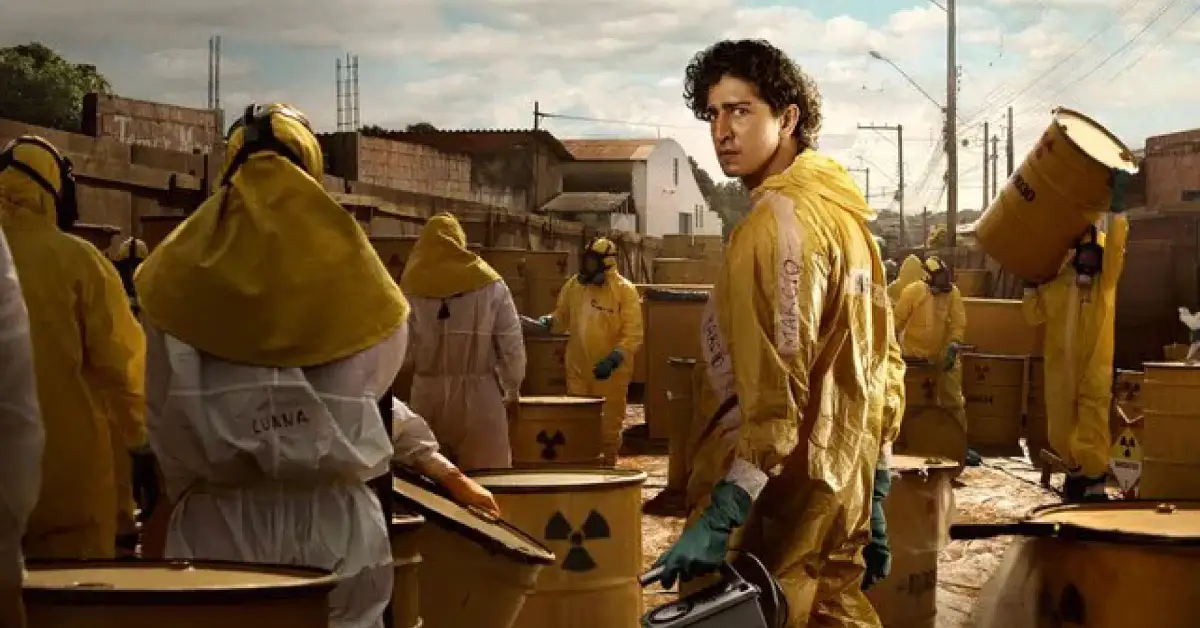
The new Netflix series Radioactive Emergency dropped on March 18, 2026, and viewers are already glued to their screens trying to understand the full story behind one of Brazil’s worst tragedies. The five-part docudrama, directed by Fernando Coimbra, revisits the real-life Goiânia radiation accident of 1987 where a glowing blue powder turned an entire city into a nightmare.
The series shows how something as simple as abandoned medical equipment could destroy so many lives. By the final episode, audiences are left with two big questions: Who actually paid for this disaster, and what happened to the ordinary people who got caught in it? Here is the breakdown of how Radioactive Emergency wraps up this heartbreaking true story.
What Actually Sparked the Radioactive Emergency?
The whole nightmare started when two scavengers broke into an abandoned medical clinic in Goiânia. They found a radiotherapy machine and took it apart, not knowing it contained powdered cesium-137. They sold it to a scrap yard owner named Evenildo, who got fascinated by the glowing blue powder inside.
Evenildo had no idea he was holding death in his hands. He showed the glowing substance to his family, friends, and neighbors. Some people even rubbed it on their skin because it sparkled. Children played with it. For days, the powder moved silently through the city while everyone remained clueless about the danger.
Soon people started getting sick with vomiting, diarrhea, burns on their skin, and hair loss. Doctors initially thought it was food poisoning because radiation sickness was so rare. It took days before someone finally brought a sample to the hospital and specialists identified it as cesium-137.
Who Was Really Responsible for the Radioactive Emergency?
The series makes it clear that this disaster was not caused by one single person. It was a chain of failures that started long before the scavengers broke into that clinic.
During the investigation shown in the final episode, authorities discovered that a former medical facility had abandoned the radiotherapy equipment during a legal dispute. They left dangerous radioactive material sitting there without properly informing the National Nuclear Energy Commission (CNEN) about it.
The director of CNEN, Beny Orenstein (played by Paulo Gorgulho), faced tough questions during a hearing. He admitted that nobody had told him about the abandoned machine. More importantly, he acknowledged that negligence played a huge role in what happened. The series shows him emotionally accepting that this was a failure of the system.
In the end, five professionals from that former medical facility were convicted of manslaughter. CNEN itself was ordered to pay 1 million Reais to help care for the victims.
What Happened to the Victims in Radioactive Emergency?
The ending of Radioactive Emergency does not give everyone a happy ending, because the real story did not have one either. Some victims survived, but others were not so lucky.
Antonia and little Celeste, a young girl, were two of the most severely contaminated characters. They struggled for days at the Navy hospital, but their conditions had already worsened too much. New treatments came too late for them, and they both passed away.
Josias and Valencio, the men who worked at the scrapyard with Evenildo, also died from radiation poisoning. Their bodies had absorbed too much of the cesium-137 before anyone even knew there was danger.
But there were survivors too. Many patients responded well to treatment and eventually left the Navy hospital. They returned to the general hospital in Goiânia and slowly started rebuilding their lives.
One of the most emotional moments in the finale shows Catarina finally reuniting with her husband and son. She had been separated from them because she showed no radiation symptoms and was kept in quarantine alone. Her struggle outside the hospital was heartbreaking. She had no home to return to, no money, and people avoided her because they feared she might still spread radiation.
What Did the Authorities Do After Discovering the Radioactive Emergency?
Once the government and CNEN fully understood the scale of the disaster, they launched a massive operation. Teams went through the city scanning people for contamination. Those who showed high levels of radiation were taken to the Navy Hospital for treatment.
The decontamination process was brutal to watch. Entire houses had to be demolished. Streets were washed down. People’s belongings, everything they owned, got burned to prevent the radiation from spreading further. The series shows families standing there watching their whole lives get destroyed just so they could survive.
One major problem emerged when authorities decided to store all the radioactive waste in Abadia de Goiás. Local residents protested hard because they feared the land would be poisoned forever. The government eventually built a secure storage facility there after convincing people it was the safest option.
The series also shows positive changes coming from the tragedy. The Ministers of Health and Labor, along with CNEN, signed a new agreement to mandate regular inspections of all radiotherapy machines. This was a direct response to the abandoned equipment that started everything.
What Happened to Márcio After the Radioactive Emergency?
One character who stands out through the whole series is Márcio (played by Johnny Massaro). He worked tirelessly through the crisis, helping track contamination sources and organizing the decontamination process. His dedication did not go unnoticed.
In the final episode, Beny Orenstein offers Márcio a job at CNEN. It is a small moment of recognition in the middle of so much tragedy. The series uses his character to show how important science and personal responsibility are when disaster strikes.
Related:









What Does the Ending of Radioactive Emergency Really Mean?
The final minutes of Radioactive Emergency mix the dramatized story with actual footage from the real 1987 incident. This switch to real images hits hard because it reminds viewers that these were not just characters, but real people who suffered.
The series drives home a simple but powerful message. Leaving dangerous materials unattended, failing to communicate properly, and neglecting safety protocols can turn a small mistake into a massive tragedy. The people who suffered most were ordinary folks who had no idea they were in danger.
Radioactive Emergency also highlights how inequality plays into these disasters. The scavengers and scrap yard workers who first handled the cesium-137 came from poor backgrounds. They did not have the education or resources to recognize the glowing powder as a threat. Their position in society put them directly in harm’s way.
By the time the government stepped in and provided help, the damage was already done. People lost their loved ones, their homes, and their sense of safety. The series ends with survivors trying to put their lives back together, holding onto each other because that is all they have left.
The show dedicates its final moments to honoring not just the victims, but also the scientists, medical professionals, and everyday people who worked tirelessly during the crisis. It is a tribute to their struggles and their bravery.
Radioactive Emergency is now streaming on Netflix for viewers in the United States, United Kingdom, Canada, Australia, India, and around the world.
Also Read: 10 One Piece Live-Action Moments That Adapted the Manga Better Than the Anime Did
Stay connected with VvipTimes for more breaking down of the latest Netflix releases and the real stories behind your favorite series.

























































































Leave a Reply