
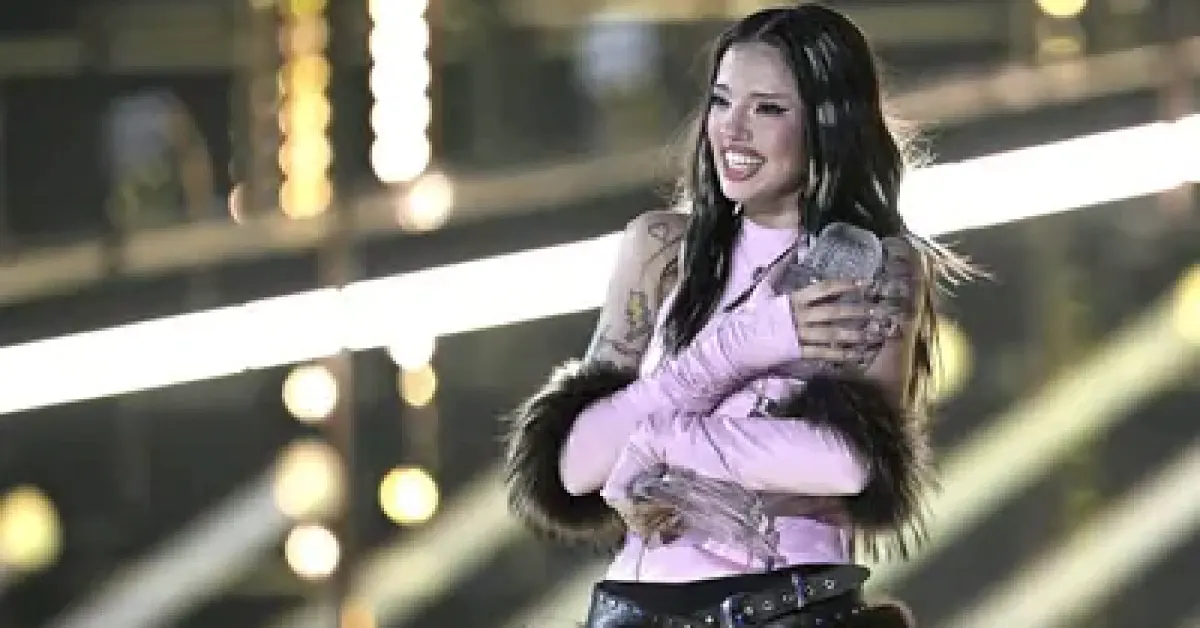
The Eurovision Song Contest 2026 grand final took place on May 16, 2026 in Vienna’s Wiener Stadthalle. The night ended with a historic victory for Bulgaria as DARA took the crown with her high-energy dance track “Bangaranga.” The 27-year-old singer scored 516 points – a massive win over Israel in second place. But throughout the night, one question kept popping up among viewers worldwide: What does “Bangaranga” actually mean?
DARA’s performance was a high-powered spectacle blending modern pop with traditional Bulgarian folklore. The song’s catchy hook – “Bangaranga, bangaranga, bangaranga” – stuck in heads across the globe. Yet the word itself left many fans puzzled, turning its meaning into one of the biggest talking points of the competition.
The Singer’s Own Definition of ‘Bangaranga’
DARA gave her own explanation of the word during the broadcast when asked in the “green room” while waiting for results. She described “Bangaranga” as a feeling rather than a literal word.
“Bangaranga is a feeling that everybody gets in themselves. It’s the moment that you choose to be in love and not fear. This is a special energy. Once you feel [at] one with nature and your universe, you feel the harmony that you can be whatever you want to be and that everything is possible.”
For the Bulgarian singer, “Bangaranga” represents personal freedom, confidence, and letting go of fear. It is the energy someone feels when they stop holding back and fully embrace who they are.
The Word’s Origin and Translation
“Bangaranga” is believed to come from Jamaican slang. The word “bangarang” in Jamaican Patois means noise, chaos, disturbance, or a fight. In this context, the song uses the female version “bangaranga” to mean “troublemaker” or “rebel.”
The translated lyrics support this meaning. DARA sings lines like:
“Welcome to the riot / I’m the bangarang”
She also declares: “I’m a rebel, I’m a danger / I’m a mover for a freedom.” The song is about starting a riot of positivity, breaking free from limits, and owning your power.
The Cultural Meaning Behind the Performance
The word’s meaning goes beyond just the lyrics. DARA’s entire stage show was built around Bulgarian folklore traditions. The performance drew direct inspiration from Kukeri – an ancient Bulgarian ritual where men wear furry costumes, bells, and animal masks to walk through villages chasing away evil spirits.
DARA called the track “pop music with folklore bones.” Her dancers wore costumes inspired by these spirit-chasers. The routine, directed by Fredrik Rydman, showed them driving away negative energy with sharp, forceful movements while DARA sang and danced through the chaos. The message was clear: “Bangaranga” is the energy that fights off fear.
Fan Reactions to the Winning Song
As soon as DARA won, fans flooded social media with excitement. Many were thrilled that a new country finally took the trophy. Bulgaria had joined Eurovision in 2005 and had never won before, also sitting out the previous three contests.
One viewer commented on the performance: “The way she sings while dancing this hard is actually insane 🔥🔥🇧🇬.” Another wrote: “That’s a pure ART! It’s like you are watching broadway theatre and official music video clip at the same time! The Winner! 🇧🇬.”
When the crowd in Vienna started chanting “Bangaranga” back at her during the performance, fans noticed the moment. One person posted: “You know everyone loves this when you hear crowd chanting BANGARANGA ❤.”
A fan from Spain also shared their support before the winner was even announced: “What if BULGARIA ENDS UP WINNING IT ALL? WHAT A PLOT TWIST. But there would be nothing better for the current health of the contest than a new country wins it. COME ON BANGARANGA! Wishing the best of luck and sending lots of love from Spain.”
Related:








A Victory With Historic Numbers
DARA’s win was not close. She earned 204 jury points and 312 televoting points for a total of 516. Israel finished second with 343 points. The winning margin of 173 points marked one of the largest in Eurovision history, even surpassing Alexander Rybak’s 2009 win for Norway.
She also achieved something rare: winning both the jury vote and the public vote. The last artist to do that before 2026 was Salvador Sobral for Portugal in 2017.
DARA’s Message to Fans
After her win, DARA spoke about what the song represents for her country. Bulgaria had been away from Eurovision for three years, and this victory marked a major comeback.
She said: “If ‘Bangaranga’ can be the song that makes someone in Manchester or Edinburgh or Brighton pull out their phone and look up Bulgaria – look up its music, its coast, its literature, its people – then I’ve already achieved something real.”
With her victory, DARA became the first Bulgarian winner in the contest’s 70-year history. Her song “Bangaranga” is now streaming across all major platforms.
Read more articles on VvipTimes for the latest updates on Eurovision winners, song meanings, and music news from around the world.












































































Leave a Reply