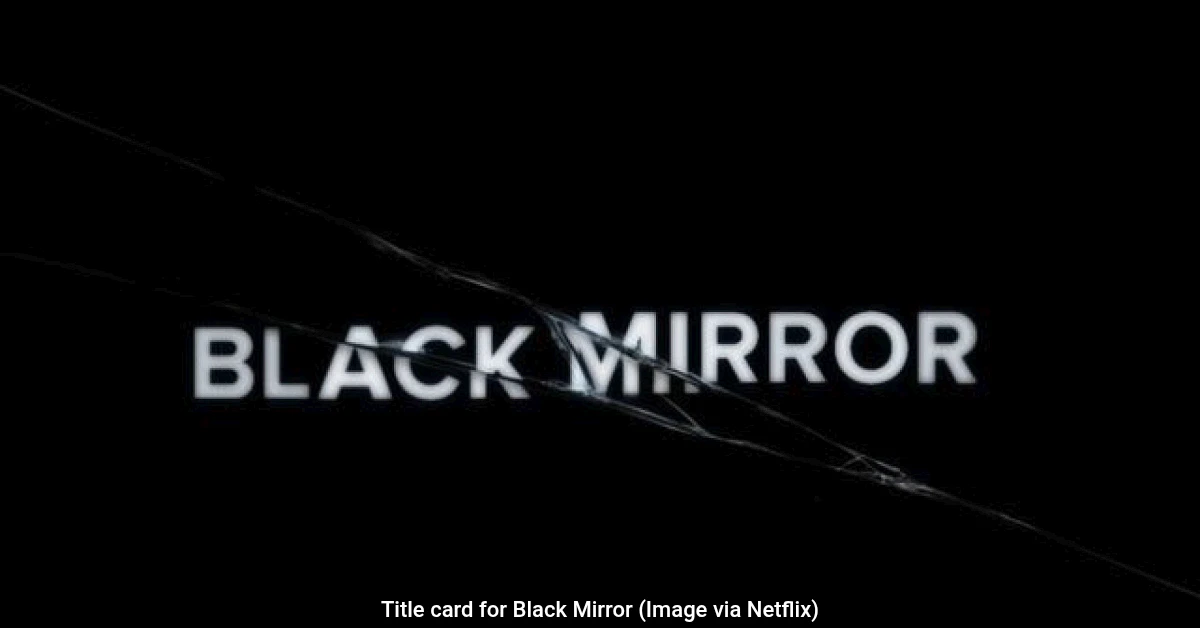
The author of Project Hail Mary recently made comments about Netflix’s acclaimed sci-fi series Black Mirror that have sparked a sharp debate among fans and critics. As the show prepares for its upcoming seventh season on April 10, Weir’s critique has many questioning whether he fundamentally misunderstands what the series is actually about.
While promoting the movie adaptation of his book Project Hail Mary, Andy Weir shared his thoughts on the popular anthology series during an appearance on the Conversations with Tyler podcast. His take was direct and critical.
“There is sort of a technophobia out there, and I don’t buy into it,” Weir said. “I feel like technology generally makes things better. It’s also why I really don’t like the show ‘Black Mirror,’ because it’s pretty much all about how technology is awful and will ruin the universe.”
Weir’s comments quickly spread across social media and entertainment news platforms, drawing responses from fans who believe the author judged the show too quickly. The debate highlights a larger conversation about what science fiction should do: offer hopeful solutions or hold up a mirror to uncomfortable realities.
What Weir Gets Wrong About the Netflix Series
For those who have followed Black Mirror since its start on Channel 4 in the UK, Weir’s criticism seems to ignore what creator Charlie Brooker has repeatedly said about his own work. In a 2014 interview with The Telegraph, Brooker clarified that the series “isn’t anti-technology.” He explained, “I’m quite techy and gadgety. I hope that the stories in this special demonstrate that it’s not a technological problem [we have], it’s a human one. That human frailties are maybe amplified by it. Technology is a tool that has allowed us to swipe around like an angry toddler.”
The series’ title itself is a clue to its real intent. The “black mirror” refers to the screen of a phone, tablet, or computer when it goes dark—reflecting the viewer’s own face back at them. The show isn’t saying technology is evil; it’s asking what happens when human flaws like jealousy, insecurity, and the need for attention are given powerful new tools.
In most episodes, the technology works exactly as designed. The problem is never a machine going haywire. The problem is what people choose to do with it, whether that’s obsessively chasing social media approval or avoiding real-world pain through digital escapes.
Two Different Ways of Telling Sci-Fi Stories
The clash between Weir’s viewpoint and Black Mirror’s approach comes down to two very different storytelling traditions in science fiction.
Andy Weir writes optimistic, problem-solving narratives. In The Martian and Project Hail Mary, characters face impossible odds but use intelligence, science, and determination to succeed. The emotional payoff comes from watching competence win the day. Technology in Weir’s world is a reliable tool that helps clever people survive.
Black Mirror, on the other hand, belongs to the tradition of The Twilight Zone. Each episode is a cautionary tale. The emotional payoff isn’t triumph—it’s recognition. Viewers feel uncomfortable because they see their own habits and choices reflected back at them, stretched to a logical extreme.
Neither style is better than the other. They simply ask different questions. Weir’s work asks: what can humans achieve when they work hard and think clearly? Black Mirror asks: what are humans willing to become when convenience and validation are always one click away?
Black Mirror Season 7 Arrives Soon With New Episodes
The debate around Weir’s comments comes as Black Mirror prepares to release its seventh season on Netflix. The new season premieres on April 10, with six new episodes that continue the show’s tradition of sharp, unsettling storytelling.
One of the most anticipated episodes is a sequel to the fan-favorite season 4 episode “USS Callister.” The new installment, titled “USS Callister: Into Infinity,” marks the first time the series has directly continued a previous story.
The cast for season 7 includes Will Poulter (Guardians of the Galaxy Vol. 3), Michele Austin (Hard Truths), Asim Chaudhry (People Just Do Nothing), Josh Finan (Say Nothing), and others. Critics have already praised the season for returning to the darker, more intense tone that made the show famous.
Fans and Critics Respond to the Author’s Take
On social media and entertainment forums, fans of the series pushed back against Weir’s description of the show as simple “technophobia.”
“Weir is evaluating the show by the wrong standard entirely,” one analysis noted. “Black Mirror was never designed to be a hopeful series about humans outsmarting their problems. It’s a cautionary anthology—closer in spirit to The Twilight Zone than to The Martian.”
Others pointed out that the show’s later seasons, including the upcoming season 7, have experimented with different tones. Some episodes have even shown technology in a neutral or constructive light, proving that the series is more interested in human behavior than in blaming machines.
One fan wrote online: “Charlie Brooker basically saying reality is catching up is savage because let’s be real, every new episode could be a mirror to the chaos we’re already living in.”
The Show’s Future Beyond Season 7
Netflix has already confirmed that Black Mirror will return for an eighth season. Series creator Charlie Brooker made the announcement in January 2026 during an interview with Netflix’s Tudum platform.
“Well, luckily it does have a future, so I can confirm that Black Mirror will return, just in time for reality to catch up with it,” Brooker said. “That chunk of my brain has already been activated and is whirring away.”
Brooker described putting together a new season like making an album, balancing different tones and types of stories. “It’s a useful thought experiment when approaching a new story,” he explained. “What haven’t we done yet, and what tone am I looking for?”
The seventh season recently earned the series its first Golden Globe nominations, including a nod for Best Television Limited Series, Anthology Series, or Motion Picture Made for Television. Performances by Rashida Jones and Paul Giamatti in the episodes “Common People” and “Eulogy” also received individual nominations.
With season 7 arriving on Netflix on April 10 and season 8 already confirmed, the debate around Weir’s comments may fade. But the larger conversation about whether science fiction should be hopeful or cautionary—or whether it can be both—is likely to continue as long as creators keep exploring the relationship between people and the tools they build.
For more updates on streaming releases and TV series news, keep checking VvipTimes for the latest entertainment headlines.