

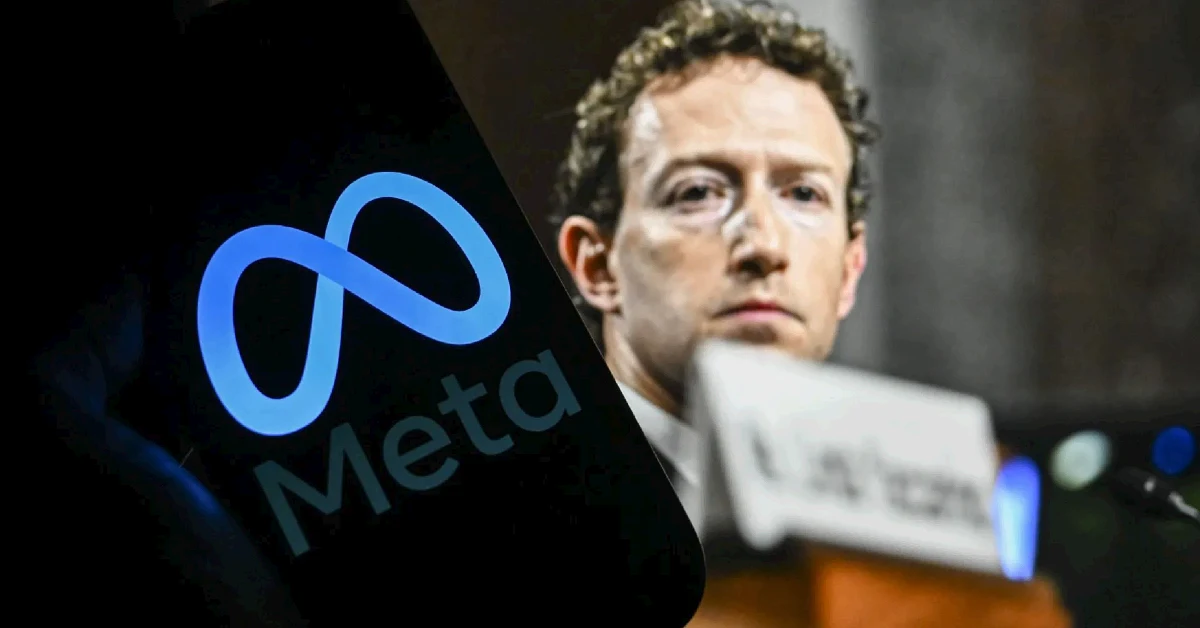
Mark Zuckerberg wanted to build the next version of the internet. Instead, he created one of the most expensive failures in tech history. The Meta CEO spent nearly $80 billion chasing the metaverse, a virtual world where people would live, work, and play. But the plan backfired badly. Now, as Meta faces legal troubles, falling stock prices, and a rushed move into artificial intelligence, that massive spending mistake follows the company everywhere.
The whole situation is full of irony. Zuckerberg renamed his company from Facebook to Meta in October 2021 to show how serious he was about the metaverse. He promised a billion people would join these virtual worlds and spend hundreds of dollars each on digital goods like clothes for their avatars and furniture for their online homes. But the numbers tell a completely different story. Reality Labs, Meta’s virtual reality division, has now lost over $80 billion. That is more money than Disney paid for Marvel, Star Wars, and Pixar combined.
The Metaverse Project That Nobody Wanted
The biggest problem for Meta was that people simply did not want to spend time in the metaverse. Horizon Worlds, the company’s main virtual space, set a goal of reaching 500,000 monthly active users by the end of 2022. The actual number fell below 200,000. Internal documents showed the embarrassing truth. Even Meta’s own employees refused to use the product. Vishal Shah, Meta’s vice president of the metaverse, had to send a memo begging his team to spend time in Horizon Worlds. When that did not work, he sent another memo ordering managers to track their team’s usage numbers. The virtual world became a checkbox on performance reviews rather than an exciting new place to hang out.
The quality of the product also hurt its chances. Avatars in Horizon Worlds had no legs, just floating torsos. Animating realistic leg movements in real time was supposedly too difficult. The graphics looked worse than video games from 2008. Virtual office spaces felt empty and lifeless. People who tried the metaverse found it boring and clunky, not futuristic and exciting.
Legal Troubles Add to Meta’s Headaches
March 2026 brought even worse news for Meta. Courts in California and New Mexico delivered two major losses that lawyers are comparing to the lawsuits that destroyed the tobacco industry. A California jury found Meta and Google responsible for harming a woman’s mental health through addictive features on their platforms. Mark Zuckerberg himself testified during the case, claiming the company was “building this thing to be a good thing that has value in people’s lives.” The jury did not agree.
Just one day earlier, a New Mexico jury ruled that Meta enabled child exploitation on its platforms and misled users about safety. The company must pay $375 million in damages. Legal experts say these rulings could open the door to thousands more lawsuits against social media companies. Timothy Edgar, a Harvard Law School lecturer, called the verdicts a “major watershed event” that shows “a big shift in how Americans are viewing Big Tech”.
The stock market reacted immediately. Meta shares dropped 7% in one day and kept falling. By the end of March, the company had lost $310 billion in market value. For the year, Meta stock was down 18%, making it the worst performer among the “Magnificent Seven” tech stocks that include Apple, Microsoft, and Google.
Zuckerberg’s Personal Fortune Takes a Hit
The falling stock price hit Zuckerberg directly in his wallet. He owns about 13% of Meta’s shares. At the start of 2026, he was worth $233 billion, making him the sixth richest person in the world. By late March, his net worth had dropped to $187 billion. That is a loss of $46.3 billion in just three months. On one Friday alone, he lost $7.7 billion when Meta shares fell sharply after the court rulings.
The Quick Pivot to Artificial Intelligence
With the metaverse failing, Zuckerberg quickly changed direction. Meta is now spending huge amounts of money on artificial intelligence. The company expects to spend up to $135 billion on AI in 2026, nearly double the $72 billion spent the year before. Meta also announced plans to invest $600 billion into AI infrastructure in the United States through 2028.
But the AI push has its own problems. Meta delayed releasing its main AI model, called Avocado, until at least May 2026. The model failed to perform as well as competing products from Google, OpenAI, and Anthropic in benchmark tests. When news of the delay came out, Meta shares dropped another 3.8%. The company is also losing AI researchers. Yann LeCun, who led Meta’s AI research division for over ten years, left the company recently.
Wall Street Still Believes in Meta’s Core Business
Despite all these problems, many financial analysts remain positive about Meta. The company’s main business, selling ads on Facebook and Instagram, continues to grow. Meta made $196.1 billion in advertising revenue last year, a 22% increase from the year before. Daily active users across Meta’s apps grew 7% in December. The company has 3.58 billion daily active users across Facebook, Instagram, Messenger, Threads, and WhatsApp.
Goldman Sachs recently raised its price target for Meta stock to $840 from $835 and maintains a buy rating. Of the 80 analysts covering Meta, 72 rate it a buy and only one says sell. The stock now trades at around 16 times expected earnings over the next 12 months, which is the lowest valuation since March 2023. Some investors see this as a buying opportunity.
You May Also Like:










The Ironic Twist That Defines Zuckerberg’s Leadership
The whole situation has a deep irony. Zuckerberg wanted to build the metaverse because he was tired of depending on Apple and Google. Apple’s 2021 privacy changes cost Meta about $10 billion in lost ad revenue. Zuckerberg wanted his own platform that he controlled completely, just like Microsoft has Windows, Google has Android, and Apple has iOS. He spent $80 billion trying to build that independence.
But while Zuckerberg was trying to force the metaverse to happen, the real virtual worlds were already thriving without him. Fortnite hosts massive virtual concerts where millions of people show up. Travis Scott performed as a 200-foot tall giant that transformed into a robot and flew through space. The graphics and experiences were far better than anything Meta built. Zuckerberg wanted to own a platform so badly that he missed the fact that people were already living in virtual spaces he did not control.
Now, the $80 billion loss defines Meta. Every time the company faces a problem, people remember the metaverse failure. Every time Zuckerberg talks about a new project, people wonder if it will be another expensive mistake. The company he renamed to show off his grand vision for the future is now stuck with a name that reminds everyone of the biggest waste of money in tech history.
Also Read: Selena Gomez Shows Love for Demi Lovato at ‘It’s Not That Deep’ Tour Opening Night
Stay updated with the latest entertainment and tech news only on VvipTimes.


Leave a Reply