

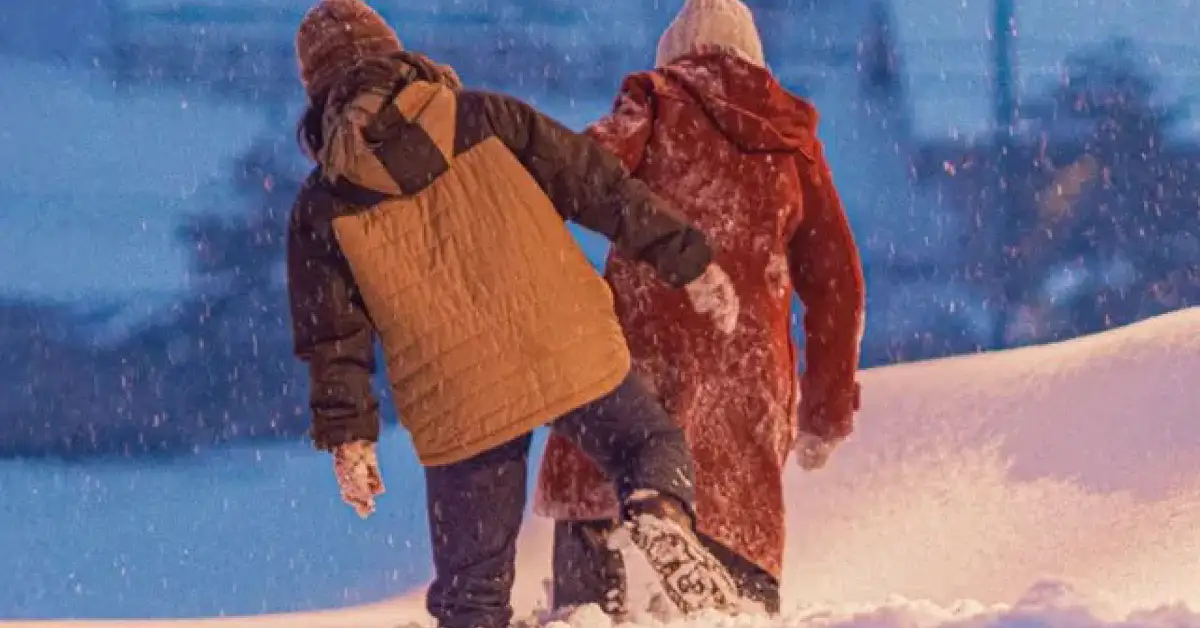
If you thought Tatsuki Fujimoto was done making you emotional after Chainsaw Man and the anime version of Look Back, think again. The acclaimed one-shot manga that broke records and broke hearts is getting the live-action treatment, and thanks to a major acquisition by GKIDS, it’s heading to a theater near you in 2026.
The announcement dropped earlier this week, and the internet is already buzzing. For fans who missed catching the 2024 anime film on the big screen or those who simply want to experience Fujino and Kyomoto’s story through a different lens, this is huge news. But this isn’t just any live-action adaptation—it’s being helmed by one of Japan’s most celebrated filmmakers, and some fascinating creative choices are already making waves.
Here’s everything you need to know about the Look Back live-action film, from the director’s vision to why it was shot entirely on film.
A Master Director Takes the Helm
Let’s talk about the person tasked with bringing this beloved story to life. Hirokazu Kore-eda is directing, writing, and editing the project . If that name rings a bell, it’s because he’s the mind behind Shoplifters, which won the Palme d’Or at Cannes in 2018. He’s also known for intimate, humanist dramas like Nobody Knows and Our Little Sister.
Kore-eda isn’t someone you’d typically expect to adapt a manga, especially one tied to the creator of Chainsaw Man. But his connection to the material feels almost destined. He shared a story about discovering the one-shot at a bookstore in Shinagawa Station.
“Without thinking, I picked a copy up—that was my first encounter with Look Back,” Kore-eda said in a statement. “That night, I read it in one sitting. Though manga and film are different genres, as a fellow creator, I felt the desperate resolve behind this work. I could feel, almost painfully, that Mr. Fujimoto simply couldn’t move forward without creating this piece” .
After producer Daiju Koide approached him about the adaptation, Kore-eda met with Fujimoto. On the way home, he made up his mind. “I have no choice but to do this,” he decided . When a director of his caliber feels that kind of pull toward a story, you know the result will be something special.
Why Shooting on Analog Film Changes Everything
Here’s a detail that should excite purists and cinephiles alike: the entire film was shot on analog film .
At Kore-eda’s request, the production avoided digital cameras entirely. This is a deliberate choice that aligns perfectly with the themes of Look Back. The story is about creation, memory, and the passage of time. Using physical film stock—with its texture, grain, and tangible quality—adds a layer of authenticity you just can’t replicate digitally.
Cinematographer Senzo Ueno handled the photography, marking his first feature collaboration with Kore-eda . Together, they captured the changing seasons in Nikaho City, Akita Prefecture, where filming took place over several months . Winter and spring were shot from February to May 2025, summer scenes in July, and autumn in November .
The teaser trailer, which dropped at Jump Festa 2025, opens with close-ups of hands drawing manga, the sound of pencil on paper filling the silence . It’s subtle, intimate, and visually stunning. If you’ve seen the anime, you know how much of the story’s power comes from quiet moments. The film format should amplify that.
The Story That Refuses to Let Go
For the uninitiated, Look Back follows two young girls: Fujino, a confident elementary schooler who draws comics for the school newspaper, and Kyomoto, a hikikomori who refuses to leave her room. They bond over their shared love of manga, and the story traces their relationship through middle school, high school, and beyond—until a tragic event forces them both to confront loss, purpose, and why they create in the first place .
It’s a deceptively simple premise, but anyone who has read the one-shot knows how devastating and beautiful it becomes. The manga went viral when it dropped on Shonen Jump+ in 2021, racking up 2.5 million views on its first day and over 4 million within 48 hours . It has since sold over 900,000 copies in Japan and been published in 37 countries .
The 2024 anime adaptation, directed by Kiyotaka Oshiyama, was a critical darling. It won Best Animation of the Year and the Creative Contribution Award at the 48th Japan Academy Film Prize . So the bar is high. But Kore-eda’s live-action version isn’t trying to compete—it’s offering a different interpretation entirely.
Who’s Behind the Scenes?
Beyond Kore-eda and Ueno, the creative team is stacked. Yūta Bandō (also known as Taku Matsushiba) is composing the music . If you’ve watched Kaiju No. 8 or listened to songs by Kenshi Yonezu and Hikaru Utada, you’ve heard his work. He described joining the project as a dream come true, recalling a memory from his graduate school days when he saw Kore-eda give a greeting at a theater in Waseda .
Other key staff include:
- Art Direction: Shinsuke Kojima
- Sound: Kazuhiko Tomita
- Costume Design: Sachiko Ito
- VFX Supervision: Rinto Ueda
Production is handled by K2 Pictures, with Daiju Koide producing . The film has already wrapped principal photography and is currently in post-production .
GKIDS Brings It West—and Sooner Than You Think
Here’s the part that matters for international fans: GKIDS has acquired distribution rights for the U.S., Canada, the U.K., and Ireland . The film will open in Japan in 2026, with Western releases to follow .
Typically, anime and live-action Japanese films take months to reach Western shores. The Look Back anime, for example, opened in Japan in June 2024 but didn’t hit U.S. theaters until October . This time, with GKIDS locked in early, the wait could be shorter.
Chance Huskey, GKIDS VP of distribution, explained why they jumped on this project. “Hirokazu Kore-eda is a master storyteller whose work continues to define contemporary world cinema, while Tatsuki Fujimoto has emerged as one of the most impactful mangakas of the past decade,” he said . He also noted that GKIDS is expanding into live-action, seeking films that reflect “artistry, emotional intelligence, and global perspective” .
What We Still Don’t Know
While we have a solid outline, some details remain under wraps. The cast hasn’t been officially announced yet—so we don’t know who will play Fujino and Kyomoto. Given Kore-eda’s track record with discovering young talent, expectations are high.
We also don’t have a specific release month. “2026” is the window, and with post-production ongoing, a mid-to-late 2026 release feels realistic. Keep an eye on GKIDS’ social channels and the official Look Back site for updates.
The teaser trailer is already out there, though, and it’s worth tracking down if you haven’t seen it. Thirty seconds of hands drawing, seasons shifting, and two figures walking side by side. No dialogue. Just mood, texture, and the promise of something deeply moving.
Related:







Why This Adaptation Matters
Fujimoto’s work resonates because it understands creators on a fundamental level—the obsession, the self-doubt, the way art connects people across distance and time. Look Back isn’t a flashy story. There are no demons or chainsaws (well, maybe metaphorically). But it might be the most honest thing he’s ever written.
Having Kore-eda at the helm means this version will likely lean into the quiet melancholy and beauty of the original. Shooting on film, capturing real seasons, working with local communities in Akita—it all points to a production that values authenticity over spectacle.
For fans who loved the anime, this isn’t a replacement. It’s a companion piece. A chance to see the same story through different eyes. And for newcomers, it’s an opportunity to experience one of the best manga of the decade in a whole new way.
The countdown to 2026 begins now.
Also Read: Invincible Season 5 Release Window Teased as Fans Analyze Amazon’s Strategy
Stay tuned to VvipTimes for more updates on Look Back, Chainsaw Man, and all your favorite anime and live-action adaptations heading your way.












































































Leave a Reply