

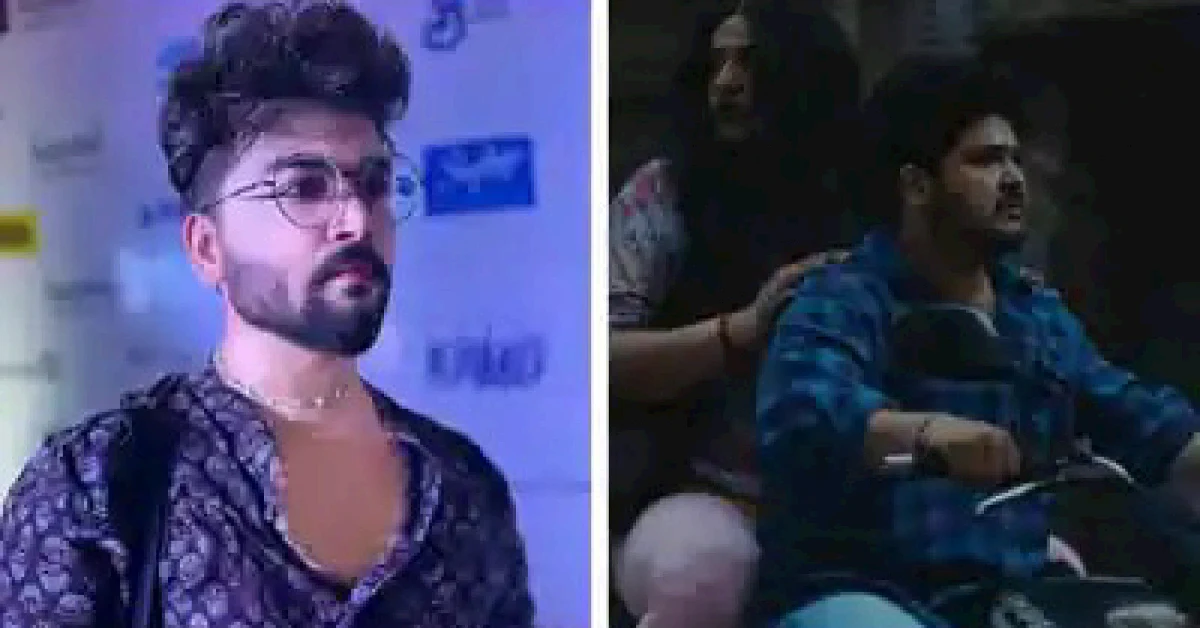
Filmmaker Rahul Roye‘s short film Aman had its world premiere at the Toronto International Film Festival 2026 in the Short Cuts competition. The 16-minute film follows a trans man who discovers he is pregnant on the eve of his gender-affirming surgery. In an interview with Hindustan Times after the premiere, Roye spoke about the film’s origins, casting trans actors, and why this story felt urgent amid India’s 2026 amendment to the Transgender Persons (Protection of Rights) Act.
A Story That Began From Personal Discomfort
Roye, who is genderqueer, said the film grew from a personal place. “Being gender queer, I could never really fit myself into the pre-existing algorithm of the colonial, heteronormative gender binary. Aman really began from that discomfort, and eventually, from finding comfort within it,” Roye told Hindustan Times.
The director explained why pregnancy became the center of the story. “Pregnancy is perhaps one of the most gendered experiences, and it is also deeply politicised and controlled. I wanted to place a trans man right at its epicentre and use that experience to examine how limited, fragile and constructed our definitions of gender really are.”
Roye’s previous work includes Man & Wife and A Lullaby for Yellow Roses, which earned over 100 international nominations. The idea for Aman dates back to 2022, when Roye was researching a documentary and came across the story of a trans man who became pregnant, chose to keep the baby, and continued with his transition. “When I came across their story, I realised that there are many such stories but it’s just that they never get told in our films,” Roye told India Today.
Casting Trans Actors for Trans Roles
Casting was non-negotiable for Roye. “It was non-negotiable for us to cast trans actors for the trans characters. They bring a lived knowledge and authenticity that is very difficult to recreate otherwise,” he said. The team spent almost a year auditioning for the roles of Aman and Sirat. “There were also very few trans actors represented by mainstream casting agencies, so the pool we were able to access through the usual casting process was quite limited.”
The breakthrough came when Roye’s earlier film A Lullaby for Yellow Roses was playing at the Dharamshala International Film Festival, where he watched Deepa Mehta‘s documentary I Am Sirat. Roye reached out to Sirat Taneja, who agreed to audition. Taneja then recommended Kabir Maan for the title role. “When we met him, we knew he was the one,” Roye said.
The film stars Kabir Maan, a transgender activist making his acting debut in the title role, opposite Sirat Taneja. The cast also includes Guntaj Deep Singh and Satakshi Nandy. Taneja previously appeared at Toronto in Deepa Mehta’s documentary I Am Sirat. According to the makers, every transgender character in the film is played by a trans actor, marking a notable step in transmasculine representation in Indian cinema.
What the Film Says About Gender and Masculinity
Roye explained that Aman’s pregnancy does not make him question his identity. “Aman knows he is a man. The pregnancy does not make him question whether he is a man. It makes him question what we have been taught a man is allowed to be. Pregnancy creates a much more uncomfortable question: If a man can become pregnant, what exactly have we been using to define masculinity? Anatomy? Reproduction? Behaviour? Social recognition?”
He added: “Pregnancy does not feminise Aman. Instead, it reveals how aggressively we gender biological functions. It allowed the film to separate masculinity from anatomy and question the foundation of gender roles.”
The director also spoke about the quiet social critique in the film. Aman’s pregnancy raises questions about access to healthcare for the transgender community, shaped by class, geography, family support, and social privilege. “For many trans people in India, the question is not only whether healthcare exists, but whether they can afford it, reach it, find an affirming doctor, take time away from work, or make reproductive choices without risking their livelihood or family support,” Roye said. “Aman reflects that reality very quietly. It asks us to recognise that autonomy means very different things depending on the resources, support and freedom a person has around them.”
Why the Film Feels Urgent Now
Roye connected the film’s release to the Transgender Persons (Protection of Rights) Amendment Act, 2026, which came into effect on May 25, 2026. The amendment narrows the legal definition of transgender people. “The previous 2019 definition expressly included trans men and trans women regardless of whether they had undergone surgery or hormone therapy, as well as genderqueer people. The 2026 amendment removes those express categories and replaces them with a much narrower list centred on specified socio-cultural identities, certain congenital intersex variations, and people forced into a transgender identity through particular interventions. It also removes Section 4(2), which had said that transgender people had a right to self-perceived gender identity,” Roye explained. “Aman is precisely the kind of person who exposes the limits of such categorisation.”
The amendment has been challenged in the Supreme Court, and state governments are working to operationalise the new rules for identity certification and gender change procedures.
Production and Global Journey
Aman is a UK-US-India-France co-production shot in Hindi and Bengali with English subtitles. The producers are Apoorva Bakshi for Awedacious Originals, Elle León Nostas for Aymara Films, Neeraj Churi for Lotus Visual Productions, and Tushar Tyagi and Abid Aziz Merchant. Executive producers include Nikkhil Advani, Dominique Welinski, and Stephen Harmaty. The film is supported by the Sumitra Gupta Foundation for the Arts, the Keshav Suri Foundation, and the Kashish Q Drishti Film Grant, with additional support from Renuka Shahane and Lotus Visual Productions.
Behind the camera, the production reflected the same spirit of inclusion. “Everyone in the cast and crew is queer-affirming, and many are queer allies,” Roye said. The cinematography was done by Tamás A. Méder, with Aditya Sharma as additional cinematographer. Anandi Athaley is the editor, Mriganka Goswami was the sound director, and Sahil Multani was the script supervisor.
Parallax Films has boarded the film for worldwide sales. The company’s founder, Liuying Cao, said: “Aman is an ambitious film, yet one deeply grounded in human emotion. It touches upon the most intimate experiences of an individual life, while never losing sight of the social and political realities and responsibilities that those experiences carry. Rather than resorting to slogans, the film reaches the audience through pain that is visceral, embodied, and deeply human.”
You May Also Like:








Festival Screenings and Release Information
Aman premiered at the Toronto International Film Festival 2026 in the Short Cuts competition, held from September 10 to 20, 2026. The film is now heading to its European premiere at the 70th BFI London Film Festival on October 16, 2026, where it will be part of the main competition. The BFI London Film Festival competition section selects 10 shorts from across the world. The film will then have its US premiere at the Tasveer Film Festival in Seattle, running from October 13 to 18, 2026. Tasveer is the world’s only Oscar-qualifying South Asian film festival.
A commercial streaming release date for Aman has not been announced yet. For audiences in the United States, United Kingdom, Canada, Australia, India, and other regions, no streaming platform or theatrical release has been confirmed as of September 27, 2026. The film’s team has said they are waiting for an Indian premiere, which would be a special moment for them. More festival selections are expected but have not been confirmed.
Roye summed up the film’s intent simply: “Aman is my attempt to create space for bodies and identities that refuse simplification. Pregnancy is one of the most deeply gendered experiences in our societies, ritualised, politicised, and controlled. By placing a trans man at its centre, the film exposes how fragile our definitions of gender truly are. Ultimately, it is a film about becoming.”
Also Read: Renuka Shahane’s Short Film ‘Tarpann’ Starring Husband Ashutosh Rana Gets Release Update
Stay tuned to VvipTimes for more updates on independent cinema, festival premieres, and stories that matter.




















































































Leave a Reply