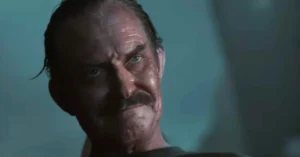

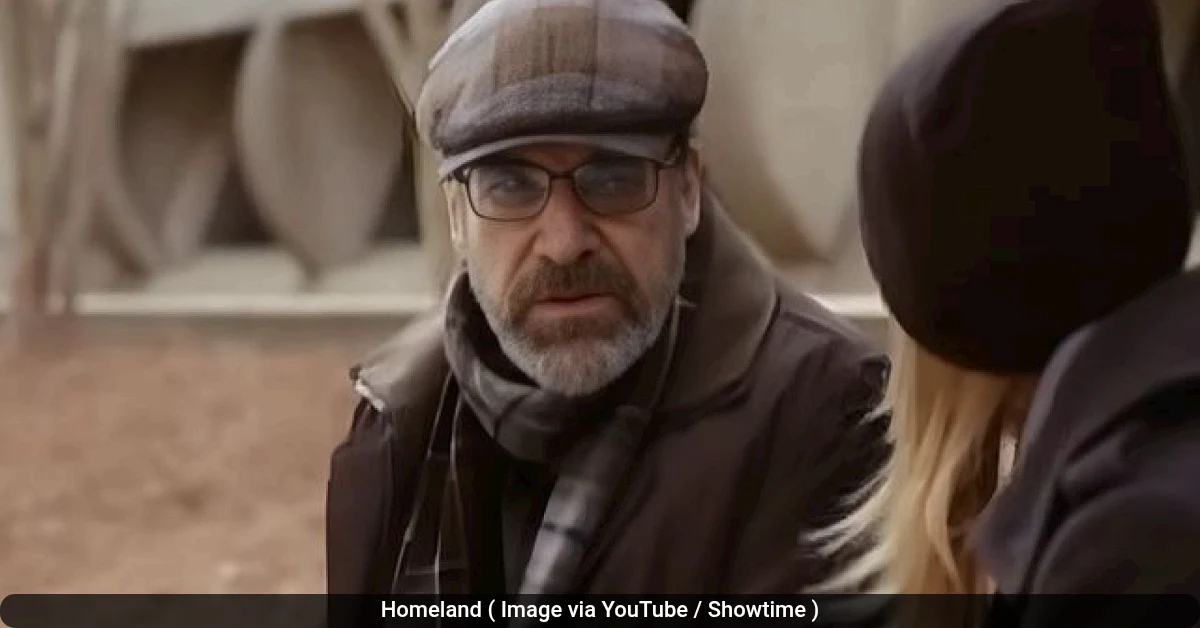
In “Homeland,” where every character has an agenda, few were as quietly powerful or morally complex as Dar Adal. As the CIA’s Director of Black Operations, he operated in the shadows, making decisions that saved American lives while often crossing ethical lines. Portrayed with chilling precision by the Oscar-winning actor F. Murray Abraham, Dar Adal was not a typical villain or hero, but a permanent fixture of the espionage machine—a man who believed the safety of the country justified almost any action. His complicated friendship with Saul Berenson and his mentorship of the tragic operative Peter Quinn defined key storylines across multiple seasons, making him one of the show’s most important and enduring supporting figures.
Dar Adal is a senior CIA officer who first appeared in Season 2 of “Homeland”. He is introduced as the head of the CIA’s clandestine Special Activities Center, a division handling the agency’s most sensitive and deniable covert operations. His long history with Saul Berenson forms the bedrock of his character; the two served together at the CIA station in Nairobi, Kenya, working on covert ops in Somalia, which forged a deep, if complicated, bond.
Adal’s primary function within the narrative is to be the “company man.” He represents the institutional will and the hard, often ruthless, choices required to protect national security. When Saul becomes acting director of the CIA after the devastating Langley bombing, he immediately brings Adal in as his deputy. Saul relies on Adal to handle the “shady things” the job requires. This dynamic shows Adal as Saul’s darker counterpart—willing to give the orders Saul hesitates to give, such as authorizing the assassination of individuals connected to the bombing.
“There’s something dogmatic and dangerous, something distinctly un-American,” Adal says of President-elect Elizabeth Keane to Saul, perfectly capturing his deep suspicion of anyone he perceives as a threat to the intelligence community’s power and methods.
Dar Adal’s influence weaves through some of “Homeland’s” most critical plots, often as a behind-the-scenes puppeteer.
His first major manipulation involves Nicholas Brody. Adal brings operative Peter Quinn into the Brody task force, initially ordering Quinn to kill Brody once his usefulness as a double agent against Abu Nazir ends. This sets in motion Quinn’s moral struggle, a central theme of his character. Later, after Brody is captured in Iran, Adal argues that Brody is a liability who must be sacrificed to protect their larger asset, Majid Javadi. He goes behind Saul’s back to ensure Brody is handed over, directly leading to Brody’s execution.
Perhaps his most shocking deal comes in Season 4. After the Taliban kidnaps Saul in Pakistan, Adal secretly negotiates with the terrorist Haissam Haqqani. He arranges for Haqqani to release a damaging video of Saul in exchange for a promise to remove Haqqani from a U.S. kill list. Saul is horrified by the deal, but Adal sees it as a necessary evil to secure Saul’s release and position him to retake leadership of the CIA. When Carrie Mathison discovers this, it shatters her trust in both men.
Adal’s loyalty is ultimately to the institution, not any one person. In Season 5, when evidence suggests Saul might be a traitor, Adal reluctantly leads the investigation against his old friend. His final major arc revolves around the election of President Elizabeth Keane. Viewing her as a dangerous reformer who will weaken American intelligence, Adal becomes involved in a conspiracy within the “deep state” to undermine her. However, when the plot escalates to an attempted assassination, Adal’s conscience leads him to warn Carrie, helping to thwart the attack.
The bond between Dar Adal and Peter Quinn is one of the most nuanced in the series, blending mentorship, manipulation, and a twisted paternal care. Adal recruited Quinn, and their relationship had a hinted sexual dimension that was later referenced in the show, with Quinn derisively calling Adal a “dirty old man”. Despite this uncomfortable power dynamic, a genuine, protective bond developed.
Adal shaped Quinn into a premier black ops operative but also exposed him to the soul-crushing aspects of the work. He watched as Quinn deteriorated—first morally, then physically after a sarin gas attack in Berlin left him brain-damaged and disabled. In Quinn’s final season, Adal, out of affection, tried to remove him from the dangerous plot against President-elect Keane. Quinn’s heroic death to save Keane represents the ultimate failure of Adal’s world to corrupt his operative’s core decency. After Quinn’s death, it was revealed he had named Carrie the executor of his will, a fact Adal conveyed to her, highlighting the tragic triangle between the handler, the operative, and the officer they both cared for.
The role of Dar Adal is brought to life by the formidable F. Murray Abraham, an actor with a legendary career. Born on October 24, 1939, Abraham rose to global fame in 1984 when he won the Academy Award for Best Actor for his iconic portrayal of the jealous composer Antonio Salieri in “Amadeus”.
His career spans decades, with notable film roles including Omar Suárez in “Scarface” (1983), Bernardo Gui in “The Name of the Rose” (1986), and characters in “The Grand Budapest Hotel” (2014) and “Moon Knight” (2022). On television, his performance as Dar Adal earned him two Primetime Emmy Award nominations for Outstanding Guest Actor in a Drama Series in 2015 and 2018.
Abraham’s portrayal of Adal is masterful in its subtlety. He uses a calm, almost gentle voice and steady gaze to deliver lines that are cold, calculating, or threatening. He never shouts or grandstands. This makes the character more intimidating, as his power comes from absolute certainty and position, not bluster. His performance adds layers of intelligence and weary conviction to a character who could have been a simple bureaucratic villain.
Related:








Dar Adal appears in 31 episodes across Seasons 2 through 7 of “Homeland”. His story concludes in Season 7. After the failed coup attempt against President Keane, Adal is arrested for his role in the conspiracy. In a final confrontation with Saul, he struggles to justify his actions, saying of Keane, “I don’t know… There’s something about her that struck me as dangerous”. This line underscores his tragic flaw: a lifetime in the shadows had led him to see existential threats everywhere, even in a democratically elected leader.
He was a permanent component of the espionage world—a man who believed he was protecting the United States from itself by any means necessary. While characters like Carrie and Saul wrestled publicly with the moral costs of their work, Adal accepted those costs as the price of doing business. His absence in the final season is felt; he represented the entrenched, institutional mindset that the series constantly questioned.
In the end, Dar Adal remains one of “Homeland’s” most brilliantly crafted characters. He was neither a monster nor a saint, but a true believer in the necessity of a ruthless intelligence apparatus, making him arguably one of the most realistically frightening figures in the entire series.
Also Read: Stranger Things Season 5 Part 2 Premiere Times: A Complete Guide for Your Christmas Binge
Sources: 1