

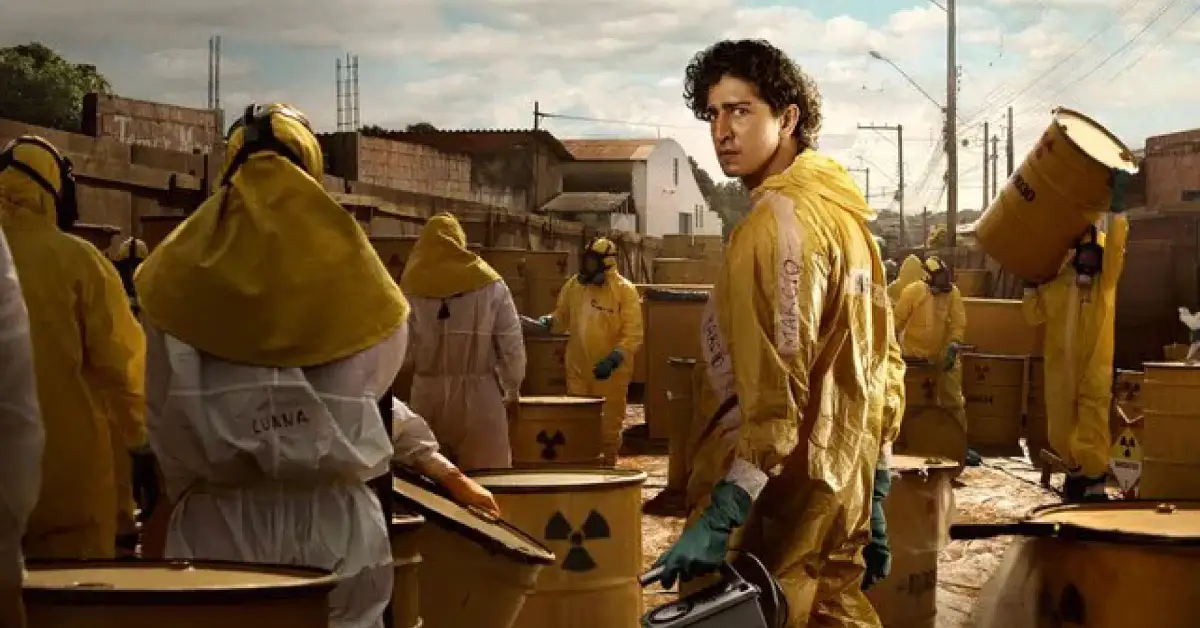
The new Netflix limited series Radioactive Emergency arrived on the streaming platform on March 18, 2026, and viewers are already calling it one of the most gripping docudramas of the year. The five-episode Brazilian production tells the terrifying true story of the 1987 Goiânia radiation accident, the worst radiological disaster outside of a nuclear power plant.
Unlike other nuclear disaster stories that focus on explosions and meltdowns, Radioactive Emergency shows a different kind of threat—one that glows blue, spreads silently through human contact, and devastates families before anyone even realizes something is wrong. The series follows the scientists, doctors, and authorities who raced to contain the contamination while treating victims who had no idea they were holding deadly radioactive material in their hands.
The Real Story Behind the Series
Radioactive Emergency is based on actual events that unfolded in Goiânia, Brazil, in September 1987. A radiotherapy machine containing cesium-137 was abandoned at a former medical clinic after the facility went out of business in 1985. No one properly secured the equipment or informed authorities about the dangerous material left behind.
Two scavengers found the machine at the partially demolished clinic and took it to a scrapyard, believing they could sell the parts. Inside the machine was a small capsule containing cesium-137, a radioactive isotope used in cancer treatment. When they opened the capsule, they released a bright blue powder that glowed in the dark—beautiful, fascinating, and incredibly dangerous.
The scrapyard owner, curious about the glowing material, invited friends and family to see it. Children played with it. People rubbed it on their skin. The contamination spread through the city like an invisible wildfire, carried by people who had no idea they were carrying poison.
What the Netflix Series Gets Right
Radioactive Emergency stays remarkably close to the historical record while creating a compelling narrative around the real people affected by the disaster. The series shows how the first symptoms—vomiting, diarrhea, burns—were mistaken for food poisoning or tropical diseases, delaying any real response for days while radiation spread through Goiânia.
The character Márcio, played by Johnny Massaro, represents the Brazilian scientists and physicists who eventually identified the threat and led the containment effort. The series follows his journey from confusion to clarity as he realizes what he’s dealing with and fights to make authorities understand the severity of the situation.
Paulo Gorgulho plays Orenstein, the director of the National Nuclear Energy Commission, who faces the impossible task of managing a crisis unlike anything Brazil had ever experienced. The series doesn’t shy away from showing the chaos and confusion of those first days, when no one knew how far the contamination had spread or how many people had been exposed.
The Human Cost of the Disaster
What makes Radioactive Emergency different from other disaster series is its focus on the victims and their families. The International Atomic Energy Agency later confirmed that 249 people were contaminated, with four dying from acute radiation poisoning.
The series follows characters inspired by real victims—people who handled the glowing powder, brought it home, shared it with loved ones. Ana Costa plays Antônia, a mother whose family is devastated by exposure. Celeste, one of the youngest victims, represents the children who played with the material, unaware that they were holding something lethal.
These scenes are difficult to watch because they feel so ordinary. Families sitting together, children playing, neighbors gathering to see something strange and beautiful—all of it happening while radiation silently destroys their bodies from the inside.
The Massive Cleanup Operation
Once authorities finally understood what they were dealing with, they launched one of the most extensive decontamination efforts ever attempted. Radioactive Emergency dedicates significant screen time to showing the scale of this operation.
Hundreds of people were examined for contamination. Those with the highest exposure were taken to the Navy Hospital for specialized treatment. Entire homes were demolished. Streets were cleaned. Personal belongings—everything the victims owned—were burned to prevent further spread of radiation.
The series shows families watching helplessly as their entire lives go up in smoke. Their homes, their furniture, their clothes, their photographs—all destroyed because they had been touched by the blue glow. It’s a heartbreaking reminder that surviving radiation poisoning often means losing everything else.
Who Was Responsible for the Tragedy?
Radioactive Emergency doesn’t let anyone off the hook. The series carefully examines the chain of failures that led to the disaster and the question of accountability that followed.
The abandoned radiotherapy machine sat unsecured for two years after the medical clinic closed during a legal dispute. No one informed the National Nuclear Energy Commission about the dangerous equipment. No one secured the site. No one posted warnings.
When investigators finally looked into what happened, both the former medical facility and the nuclear commission faced serious questions. In the series, Orenstein admits during a hearing that negligence played a key role—that the system failed because people failed.
In reality, five professionals from the medical facility were found guilty of manslaughter, and the National Nuclear Energy Commission was ordered to pay damages to victims. The series shows these outcomes while making clear that no punishment could undo the damage done.
New Safety Standards Born from Tragedy
One of the most important aspects of Radioactive Emergency is how it shows disaster leading to change. In the aftermath of the Goiânia accident, Brazilian authorities implemented new safety protocols for radiotherapy machines and radioactive materials.
The series depicts officials signing agreements to mandate regular inspections of medical equipment handling radioactive sources. These changes didn’t bring back the victims or undo the suffering, but they helped ensure that such a tragedy wouldn’t happen again the same way.
How the Series Differs from Other Nuclear Disaster Stories
Viewers naturally compare Radioactive Emergency to acclaimed series like Chernobyl, but the two shows tell very different stories. Chernobyl depicted a massive explosion that everyone knew was happening. Radioactive Emergency shows a silent, invisible threat spreading through ordinary human interaction.
There were no explosions in Goiânia. No fireballs. No heroes sacrificing themselves in radioactive water. Instead, there were families sitting together, children playing, neighbors visiting—and radiation moving with them, carried on skin and clothing, shared through touch and curiosity.
The series also places much stronger emphasis on the victims’ personal stories. While Chernobyl focused largely on the officials and scientists managing the crisis, Radioactive Emergency spends as much time with affected families as with the experts trying to save them.
The Cast and Creative Team
Fernando Coimbra serves as lead director, with Iberê Carvalho co-directing. The series comes from Gullane, the Brazilian production company behind other Netflix hits like Senna and Sintonia. Gustavo Lipsztein created the series and worked on the screenplay with Rafael Spínola, Fernando Coimbra, Stephanie Degreas, and Fernando Garrido.
The cast brings together some of Brazil’s most talented actors:
- Johnny Massaro as Márcio
- Paulo Gorgulho as Orenstein
- Tuca Andrada as the Governor
- Bukassa Kabengele as Evenildo
- Ana Costa as Antônia
- Alan Rocha as João
- Marina Merlino as Catarina
- William Costa as Darlei
- Antonio Saboia as Eduardo
- Luiz Bertazzo as Loureiro
- Clarissa Kiste as Paula
- Douglas Simon as Souza
- Leandra Leal and Emílio de Mello in special appearances
Streaming Details for Global Audiences
Radioactive Emergency is now streaming exclusively on Netflix with all five episodes available. The series is in Portuguese with subtitle and dubbing options for international viewers.
For viewers in the United States, United Kingdom, Canada, Australia, and India, the series appeared on Netflix on March 18, 2026, as part of the platform’s global release strategy. The show has already generated significant buzz among subscribers looking for something more substantial than typical streaming fare.
Why This Story Matters Now
Radioactive Emergency arrives at a time when questions about safety, government accountability, and scientific literacy feel more urgent than ever. The series shows what happens when dangerous materials aren’t properly secured, when authorities don’t communicate, when ordinary people don’t have the information they need to protect themselves.
You May Also Like:









The Goiânia disaster didn’t have to happen. The machine should never have been left unsecured. The site should have been guarded. Warnings should have been posted. But none of that happened, and families paid the price.
Johnny Massaro, who plays the lead role, emphasized the responsibility of telling this story. Speaking in a Netflix behind-the-scenes feature, he said:
We need to have a lot of respect when approaching this story because we are dealing with real pain. It’s a very deep wound in our history that many people don’t know about.
The series ensures that wound isn’t forgotten. It brings the story of Goiânia to a global audience, showing viewers around the world what happened when a beautiful blue powder became one of the most dangerous things on Earth.
For more gripping drama reviews and the latest Netflix updates, keep reading VvipTimes for comprehensive coverage of the best series streaming now.


Leave a Reply