

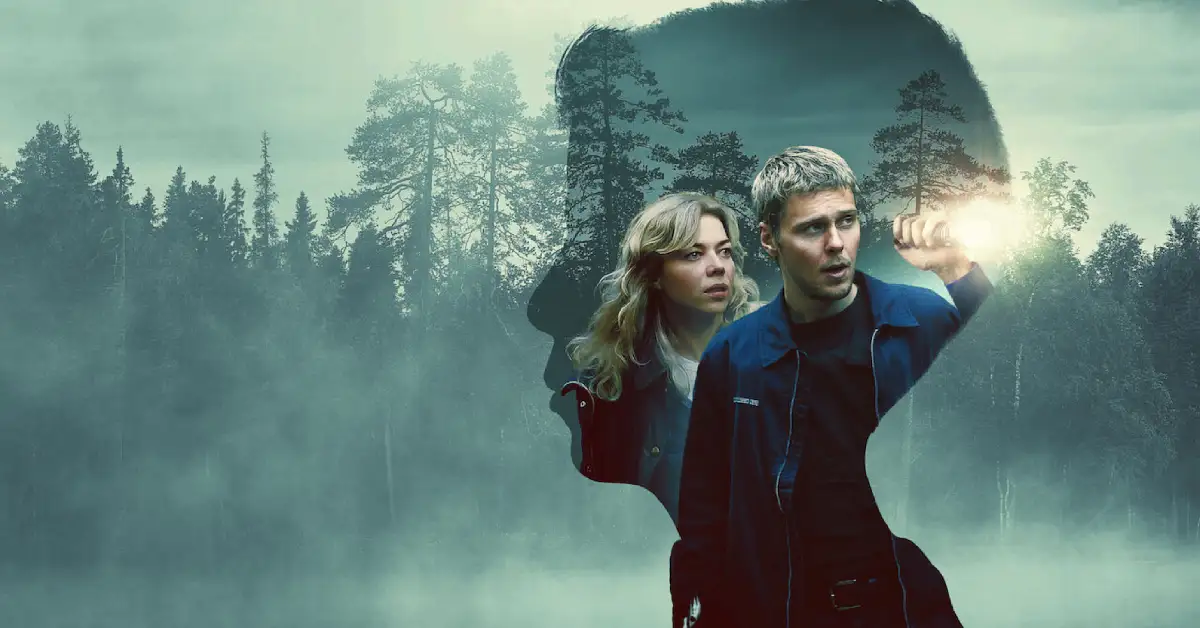
The new Polish thriller on Netflix, Colors of Evil: Black, starts as a missing child case. But by the time the credits roll, it has become something much darker. The film does not just catch a kidnapper. It unmasks an entire town that spent decades protecting a network of abuse, hiding behind church steeples and family names.
Directed by Adrian Panek, this sequel to Colors of Evil: Red follows prosecutor Leopold Bilski (Jakub Gierszał). He is sent to the sleepy coastal town of Trulocz in Kashubia, Poland, as punishment for being too good at his job. He expects a quiet posting. Instead, he walks into a nightmare.
Who Actually Kidnapped Piotrus? The Tragedy of Nicki
For most of the movie, suspicion falls on powerful people. There is Marek Chojnacki, the wealthy meat plant owner, and his deceased father. But the person who actually grabs young Piotrus from the harvest festival is Nicki, the secret son of Old Man Chojnacki.
Nicki is not a typical monster. The movie reveals he was born from the assault of a 14-year-old choir girl named Basia. He grew up hidden in a shack, fed only scraps and a book of dark folklore about the Lopi, a Kashubian vampire. He watched his mother take her own life.
When Nicki overhears that Piotrus was born “coiffed” (with his amniotic sac intact), his broken mind snaps. According to the old legend his father poisoned him with, a child born like that will turn into an evil creature. Nicki believes he must kill the boy to save the town. The tragedy is that Nicki is not just the villain; he is also the final product of the town’s sins.
The Uncomfortable Truth About Adam Poznanski
The film opens with a brutal scene of a man chopping a child’s body in the woods. That victim is Adam Poznanski. The town told everyone Adam was adopted by a rich cousin. It was a lie.
Bilski discovers that Adam was kidnapped. He jumped out of a moving car trying to escape and died from the fall. But instead of reporting it, the police chief Adamczyk ordered Nicki to dispose of the body. Nicki, reverting to the only script he knows, performed the vampire ritual: he cut off Adam’s head to stop the “evil” from rising.
The chilling detail is that Adam’s mother knew. Or at least, she suspected. But the Chojnacki family gave her a house and money. She traded her son’s justice for comfort. This is the core accusation of the film: that silence is a commodity.
The Real Culprit: The Church and the System
Colors of Evil: Black is not a whodunnit where one person is arrested and everything is fine. The film argues that Nicki is merely a symptom. The disease is the adults who looked away for years.
Old Man Chojnacki (the father) used the local church choir as his hunting ground. He assaulted children, including Julia (Piotrus’s mother) and Arek Filipiak. The film shows how the parents, the priest, and the wealthy elite covered it up. They protected the reputation of the church and the business to keep the town’s economy running.
The worst betrayal comes from Andrzej Pakosz (Andrzej Chyra), Bilski’s own boss. He buried the files on Adam. He kept the crime rate artificially low. Why? Because his own son, Michal, was one of Old Man Chojnacki’s victims. Rather than face the shame or get justice, Pakosz hid the evidence and avoided his son. His inaction allowed the cycle to continue for years.
You May Also Like:









The Ending: Justice Is Not Enough
In the final act, Bilski saves Piotrus just moments before Nicki can kill him. Nicki is arrested. The truth comes out. But the movie refuses to give a happy ending.
Bilski confronts Pakosz, shoving the evidence in his face. He exposes the police chief. But the system is bigger than one prosecutor. The movie ends with Bilski visiting Julia and Piotrus. There is a hint of a fresh start, but it is fragile.
The final message of Colors of Evil: Black is deeply cynical. The town of Trulocz did not just have a “bad apple” in Nicki. It had a rotten harvest. For decades, the ordinary citizens valued a peaceful facade over the safety of children. Every time someone saw the abuse and did nothing, they painted the town a little darker.
For more deep dives into the best thrillers on Netflix, keep reading VvipTimes.


Leave a Reply