

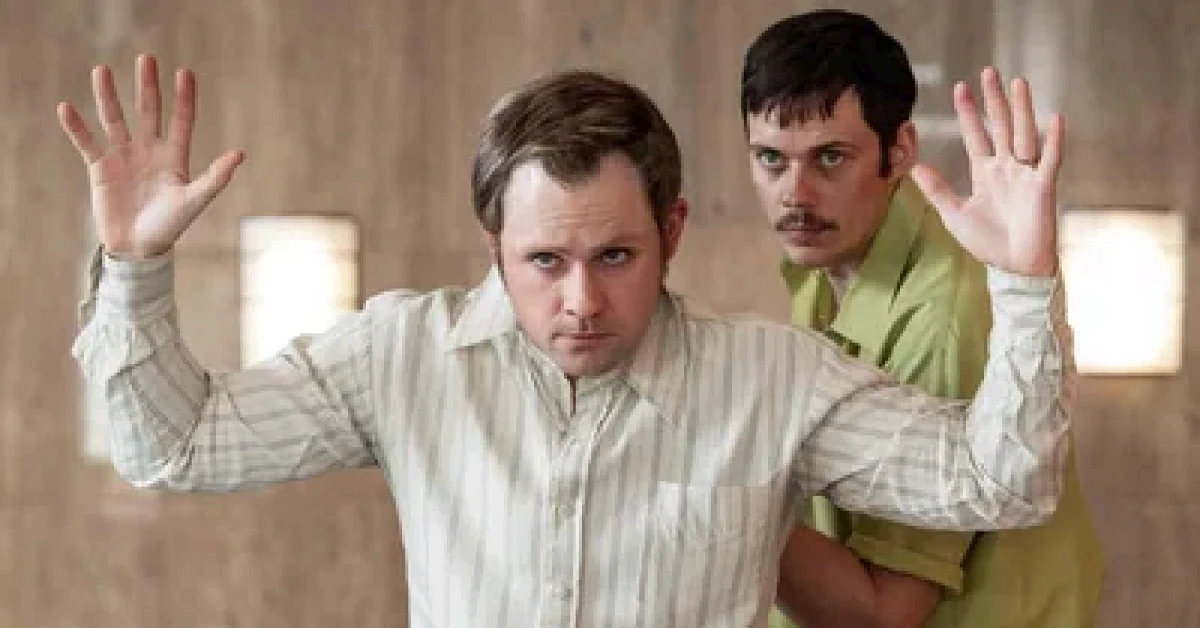
The new crime thriller Dead Man’s Wire is arriving on Netflix on May 28, 2026, bringing one of America’s strangest hostage situations to streaming audiences worldwide. Directed by Gus Van Sant and starring Bill Skarsgård as the captor, the film tells the true story of a 1977 standoff that gripped Indianapolis for 63 hours. Before you press play, here are five key facts about the real Tony Kiritsis case that shocked the nation.
The Dispute Started With a Failed Shopping Center
Tony Kiritsis was a real estate developer from Indianapolis. In 1973, he took a $110,000 loan from Meridian Mortgage Company to buy 17 acres of land on the city’s west side. His plan was to build a shopping center. But the project collapsed, and Kiritsis believed the mortgage company deliberately sabotaged him. He claimed that M.L. Hall, the company president, told potential tenants not to lease space on his property. Facing foreclosure and financial ruin, Kiritsis became convinced the Hall family was trying to steal his land.
For years, Kiritsis held onto his anger. His brother James Kiritsis later said a personality change happened after their mother died of cancer at age 41. “Maybe that’s what started it,” James told reporters.
The Weapon Was Wired to the Hostage’s Head
On February 8, 1977, Kiritsis walked into the Meridian Mortgage offices with his arm in a sling and a suit box under the other arm. He asked for M.L. Hall, but the company president was on vacation in Florida. Instead, Kiritsis went into the office of Hall’s son, Richard Hall, a mortgage executive.
Inside the suit box was a sawed-off, double-barrel .12-gauge shotgun. Kiritsis attached a steel wire from the gun’s trigger around Richard Hall’s neck. The wire was so tight that the gun barrel pointed directly at the back of Hall’s head. Any sudden movement—by Hall or by police trying to intervene—would pull the trigger and fire the weapon instantly. This setup became known as the “dead man’s wire” or “dead man’s line.”
Kiritsis then used Hall’s office phone to call police. During a 50-minute call, he said, “Sir, this is a dire emergency, a real serious thing. I’ve just taken a prisoner.”
The 63-Hour Standoff Played Out Live on Television
Kiritsis forced Hall out of the building and into the freezing Indianapolis streets. With the shotgun still wired to Hall’s neck, Kiritsis paraded his hostage for four blocks in near-zero temperatures. Television crews and reporters rushed to the scene after hearing police scanner traffic. The dramatic sight of a man walking with a gun tied to another man’s head played out live on local news.
At one point, Kiritsis stole a police car and ordered Hall to drive them to Kiritsis’ apartment at the Crestwood Village complex. Once inside, Kiritsis claimed he had booby-trapped his apartment with dynamite. Police evacuated nearby residents and set up a perimeter.
During the standoff, Kiritsis refused to talk to most negotiators. Instead, he demanded to speak with Fred Heckman, a news director for local radio station WIBC-AM. Kiritsis called Heckman repeatedly, and Heckman aired the recorded conversations. On the radio, Kiritsis accused Meridian Mortgage of ruining his life. He called himself “an angry man for 44 years” and later, after releasing Hall, declared, “I’m a goddamn national hero, and don’t you forget it!”
The live coverage sparked serious debate among journalists. Some argued the media should not give a hostage-taker airtime. But others believed broadcasting Kiritsis’ messages was necessary to keep Hall alive.
The Insanity Verdict Changed Indiana Law
After 63 hours, Kiritsis finally released Hall on February 10, 1977. He walked Hall out of the apartment, still wired to the shotgun, and held a 23-minute profanity-filled press conference for the assembled cameras. Then he removed the wire from Hall’s neck and fired a shot into the ceiling to prove the gun was loaded.
Police arrested Kiritsis immediately. He faced charges including kidnapping, armed robbery, and armed extortion. At his trial in October 1977, his lawyers entered a plea of not guilty by reason of insanity. Psychiatrists testified that Kiritsis had been living in a paranoid delusional state, convinced beyond reason that the Hall family was trying to rob him.
The jury returned a surprising verdict: not guilty. But instead of going free, Kiritsis was sent to the State Department of Mental Health. He spent 11 years in psychiatric custody.
Indiana lawmakers were unhappy with the outcome. They passed what became known as “The Kiritsis Law,” which created new verdict options including “guilty but mentally ill” and changed how insanity defenses work in the state.
You May Also Like:







What Happened to Both Men After the Crisis
Richard Hall struggled with the trauma for decades. He rarely spoke about the experience. A former reporter told Indianapolis Monthly, “I don’t think Dick Hall has ever uttered a word about it. He made it clear that he wouldn’t discuss the incident with the press—not then, not ever.” A friend said Hall spent much of his time staring out windows, worried that Kiritsis would return.
Forty years after the standoff, Hall finally broke his silence. In 2017, he published a memoir titled “Kiritsis and Me: Enduring 63 Hours at Gunpoint” and gave his first television interview. He told WTHR, “I think it’s probably affected my life more than I really think. None of us ever know what’s going to happen, so you just got to really live with it.” Hall retired in the early 1990s and died on May 20, 2022, at age 87.
Tony Kiritsis was released from psychiatric care in January 1988. He had difficulty finding housing and could not get car insurance, so he never owned a car again. He lived on a military pension from his time as an Army veteran serving during the Korean War. Kiritsis was diagnosed with diabetes in 2000 and later had part of his right foot amputated. He died at his Indianapolis home on January 28, 2005, at age 72 from complications related to diabetes.
Dead Man’s Wire arrives on Netflix on May 28, 2026. The film also stars Dacre Montgomery as Richard Hall, Al Pacino as M.L. Hall, Colman Domingo as radio journalist Fred Temple, and Cary Elwes as police negotiator Mike Grable. The movie holds a 91% critics score on Rotten Tomatoes.
Also Read: TIFF Plans Complete Christopher Nolan Film Retrospective Before ‘The Odyssey’ Release
Looking for more true crime dramas to stream this week? Check out VvipTimes for the latest OTT releases and entertainment news updates.


Leave a Reply