

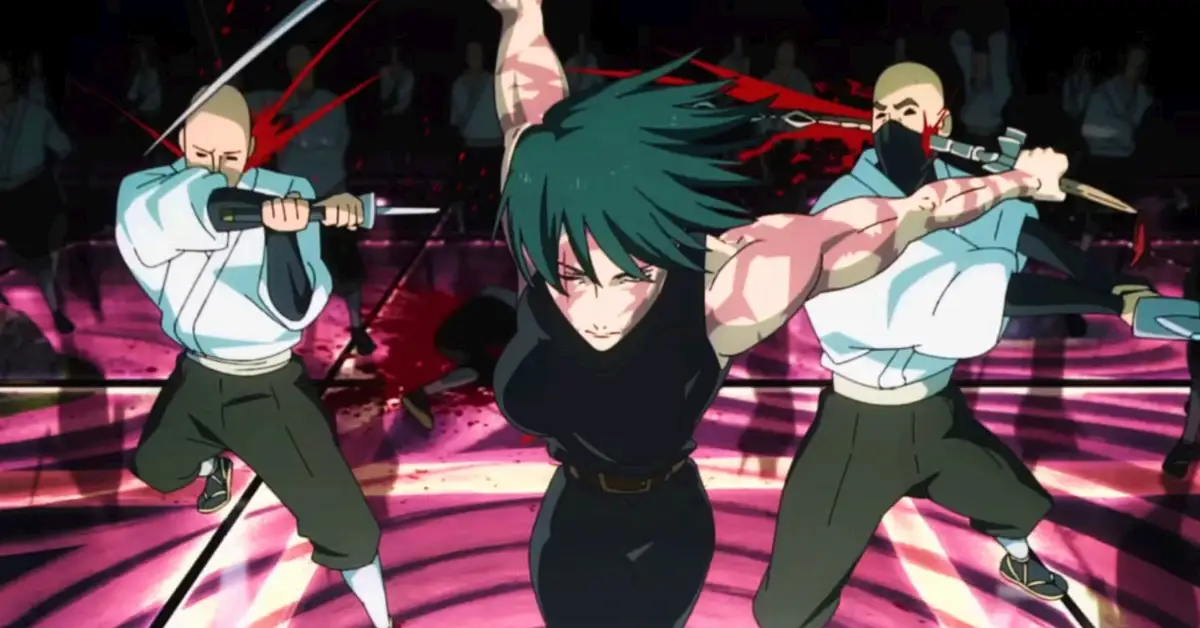
Mani Puhan, the voice behind Maki Zen’in in the Hindi dub of Jujutsu Kaisen, recently opened up about the challenges of bringing one of modern anime’s strongest female characters to life. In an exclusive interview arranged by Crunchyroll, Puhan detailed the emotional depth required to portray Maki’s transformation, especially as the anime heads toward the highly intense events of the Zenin Clan massacre.
For fans watching the series in Hindi, Maki’s voice carries a unique weight. She is not just a fighter; she is a character built on years of trauma and unyielding determination. Puhan explained that understanding this complexity was the key to getting the performance right. Unlike characters who express pain through loud outbursts, Maki’s strength lies in how she keeps her emotions in check while still being utterly devastating in her actions.
The Complexity of Voicing a Fighter Carrying the Weight of the Zenin Clan
When discussing how she approached the character, Puhan highlighted a specific emotional core that defines Maki: her relationship with her sister, Mai Zenin. This bond is the driving force behind Maki’s rage and her eventual path of destruction. Puhan noted that Maki isn’t simply fighting individual enemies; she is fighting an entire system that rejected her.
“Emotional shift [between Maki and Mai] was an important part of the story. As you know, since you have watched the series, Maki is a straightforward character; she is not very dramatic. Maki isn’t fighting an individual; she’s fighting the entire system.”
Puhan elaborated on how Maki processes the loss of Mai. “She was never supported by her clan and many others, so when Mai, a support and belief system for Maki, goes away, she is broken, but she doesn’t succumb to that situation. She has to move forward, being in that situation, and destroy the system that makes her character very powerful in that aspect.”
This ability to push forward despite overwhelming grief is what Puhan found most relatable. She revealed a personal connection to the character’s resilience, stating, “I am like that to some extent; I don’t give up early, just like Maki, so I relate with her, and it was fun playing her.”
“Controlled Rage”: Balancing Subtlety and Intensity in Performance
One of the biggest challenges in voicing Maki is balancing her fierce combat presence with her quieter, more stoic personality. She is a character who rarely raises her voice unnecessarily, yet every line she delivers must feel sharp and intentional. Puhan described this duality as a form of “controlled rage.”
“She has a very controlled rage… her emotions are very straight and sharp,” Puhan explained. “There’s a lot to play around with in her character—her anger, her pain, her determination. When you portray that, it becomes very intense, and that’s what makes Maki so powerful to perform.”
This description is crucial for understanding how Maki differs from other shonen heroes. Her emotional range is subtle, but her actions are explosive. Puhan emphasized that capturing this contrast is what makes the role so demanding, requiring the actor to hold back even when the scene calls for extreme physical aggression.
The Technical Reality of Dubbing Jujutsu Kaisen in Hindi
Beyond the artistic interpretation, Puhan and her co-stars—Lohit Sharma (Gojo Satoru), Vidit Kumar (Yuji Itadori), and Sahil Kulkarni (Megumi Fushiguro)—have been vocal about the technical realities of dubbing in India. In recent interviews, the cast discussed the intense time constraints that come with simuldubbing, where episodes are often turned around within one to two days.
Sahil Kulkarni noted that actors are often expected “to finish everything within a day or two,” forcing them to work with limited context and preparation. This lack of preparation time makes it difficult to understand the full emotional arc of a scene before stepping into the booth.
Puhan specifically addressed the difficulty of matching lip movements. “These reactions aren’t easy to copy either—you often have to listen two or three times to understand what’s happening,” she said. Japanese speech patterns do not always map cleanly onto Hindi phrasing, requiring the actors to be meticulous about timing while still conveying the raw emotion of the scene.
The Impact of Localization on Maki’s Character
Another challenge the cast faces is localization—adapting the dialogue so it resonates with Indian audiences while staying true to the original intent. Sahil Kulkarni explained that the team focuses on maintaining consistency in Hindi dialogues, ensuring that “it should match the vocabulary of the current era.”
For Maki, this means finding Hindi phrases that carry the same weight as the original Japanese. Her lines are often direct and cutting, leaving no room for hesitation. Puhan’s ability to deliver these lines with the correct emotional tone is what makes the Hindi version of Maki stand out.
Lohit Sharma added that Hindi dubbing aims to reach a wider audience that prefers viewing in regional languages. “We do not look at just 5% of the audience. We have to look at the whole world,” he stated.
Looking at Maki’s Story Arc: Justice or Vengeance?
As Jujutsu Kaisen progresses, Maki’s story takes a dark turn. The destruction of the Zenin Clan is one of the most talked-about moments in the manga, and fans are eagerly awaiting how it will be portrayed in the anime’s upcoming season. During the interview, Puhan was asked whether she views Maki’s actions as justice or vengeance.
“I think it began as vengeance,” she responded. “However, as the story continues, Maki turns to the other side.”
This shift is crucial to understanding Maki’s character arc. She starts as a victim of the Zenin Clan’s oppressive system, but her fight evolves into something bigger. Puhan explained that during the recording of these intense scenes, she relied heavily on direction to capture the correct tone. “When I started dubbing for her during this scene, I was given instructions by our director on how to approach her. So, keeping that in mind and controlling her emotions is how I depicted her.”
The theme of justice versus vengeance is a recurring question in Jujutsu Kaisen, and Maki’s story represents one of the most extreme answers to that question. Unlike Yuji Itadori, who believes in saving everyone, Maki operates on a harsher principle: destroy the system that tried to destroy her.
You May Also Like:






Fan Response and the Growing Popularity of Hindi Anime Dubs
As Hindi dubs become more common on platforms like Crunchyroll, the voice actors are starting to see the impact of their work. Puhan noted that fan reception has been positive, with viewers appreciating the effort put into the performances.
“The fans have really appreciated the dub. They’ve liked the voice actors’ performances and the overall recording. So maybe it’s improving with time,” she said.
This growing appreciation reflects a larger shift in India’s anime ecosystem. More viewers are comfortable watching anime in their native language, and the demand for high-quality dubs is increasing. For Puhan, being part of this movement is meaningful, especially when representing a character as bold and unapologetic as Maki.
She expressed gratitude for the opportunity, saying, “It feels great… I’ve been longing for these roles.”
The Hindi dub of Jujutsu Kaisen is available exclusively on Crunchyroll for viewers in India and across the globe. The series continues to attract new audiences as the story reaches its most intense moments.
Also Read: Does Fujimoto Leave Any Hope for Chainsaw Man Part 3 After Part 2 Finale? Everything We Know
For more stories on anime and voice acting, keep visiting VvipTimes for the latest updates from the world of entertainment.



















































































Leave a Reply