

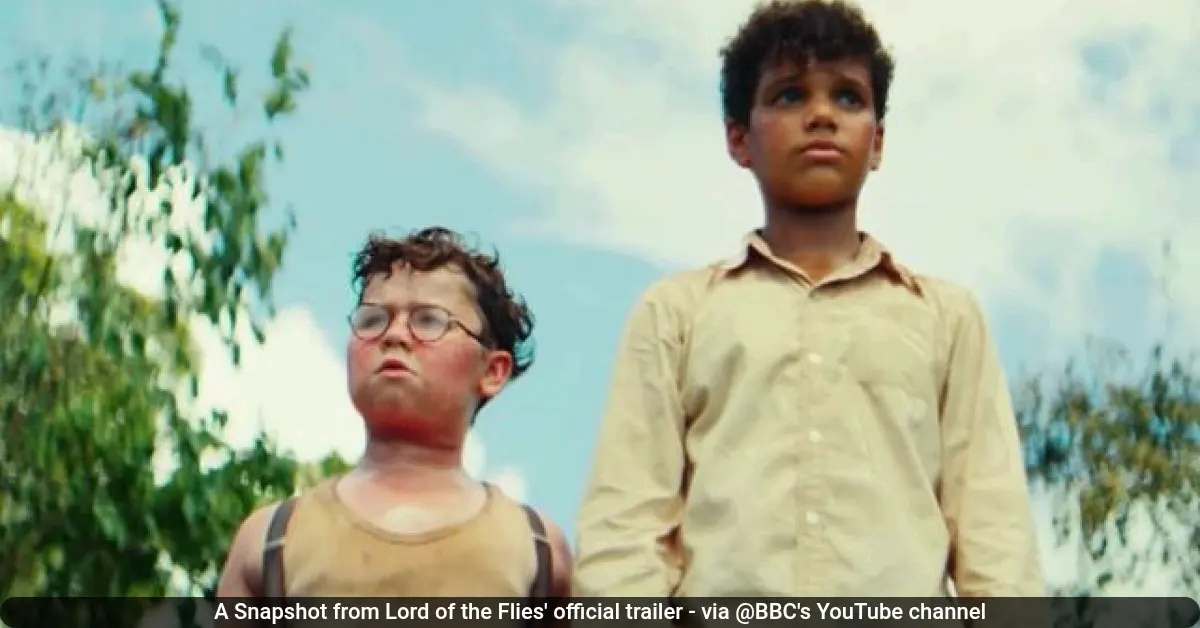
The new Lord of the Flies adaptation on Netflix is dividing audiences and critics alike. While the four-hour series stays true to William Golding‘s 1954 novel, writer Jack Thorne (“Adolescence”) made several key changes. Some updates give forgotten characters new depth. Others extend the most painful moments for bigger emotional impact. The series premiered on Netflix US on May 4, 2026, after its initial run on BBC One in February.
Piggy Finally Gets a Real Name After 72 Years
One of the biggest changes in Lord of the Flies involves the character known as Piggy. The book never reveals his real name. Golding kept him stuck with the cruel nickname given by other boys. Thorne changed that. In the Netflix series, Piggy’s real name is Nicholas, and Ralph (Winston Sawyers) calls him Nicky.
Thorne told Variety he made this choice for a specific reason.
“I gave him a name for himself. I felt like he needed that identity. But more importantly for Ralph, because his journey through the island is Piggy to Nicky. This is someone who learns to judge people, not by how other people see them, but by how he should.”
The name change allows Ralph to grow throughout Lord of the Flies. He starts by betraying Piggy’s trust, telling everyone the nickname just to make Jack (Lox Pratt) like him. By the end, Ralph sees Piggy for who he truly is, not what others call him.
The Show Gives More Backstory to Every Boy
The book drops readers onto the island without much history. The Netflix Lord of the Flies does something different. Flashbacks reveal what each boy left behind.
Ralph lost his mother and struggles to face his grieving father. Jack carries deep feelings of not being good enough, always trying to please his dad. Simon (Isaac Talbut) comes from a home where his mother suffered physical abuse. These glimpses explain why each boy acts the way they do when the rules of society vanish.
The series also changes how Jack and Simon relate to each other. A quiet moment in Episode 2 shows Simon painting Jack’s face with mud. Thorne said this came from watching his own 10-year-old son.
“The thing that I observe in my 10-year-old is that he is still very anxious to have physical contact with us. But amongst his peer group, they are rough and tumble, and they still touch a lot.”
Thorne added that he doesn’t think the boys are figuring out their sexuality. “I think it’s about the tenderness between them.”
Simon’s Death Is More Confusing and That’s the Point
In the book, Simon discovers the truth about the “beast” (a dead parachutist) before he is killed. The Netflix Lord of the Flies removes that moment entirely. Simon never sees the parachutist. The Lord of the Flies (the pig’s head) already spoke to him. He already understands the truth.
The death scene itself plays out as chaos. Viewers may not immediately realize what happened. Thorne said this was intentional.
“When I was 11 and I read the book, I felt like Simon, and then Simon was suddenly dead. I didn’t understand what had happened until Golding talked about his body drifting out to sea. I thought that it was so important to capture that confusion.”
The show trusts the audience to connect the dots after seeing the body.
Piggy’s Final Moments Last Much Longer
In Golding’s book, Roger (Thomas Connor) pushes a boulder onto Piggy. He dies right away. His body washes out to sea. The Netflix Lord of the Flies changes this completely.
Piggy survives the initial hit. Ralph carries him through the jungle, trying to keep him alive. Piggy eventually dies from his head wound, and Ralph buries him properly. This never happens in the book.
Thorne explained that Episode 4 is Ralph’s episode. Giving him a companion on the run made narrative sense. But the emotional reason ran deeper.
“I wanted Ralph to have the opportunity to understand how much he cared for this kid. Ralph burying Nicky is one of my favorite moments of anything I’ve ever done.”
The burial scene has almost no dialogue. But seeing Ralph struggle to do right by his friend hits hard. In Episode 1, Piggy suggested they bury the dead pilot. The other boys ignored him. Ralph makes sure the same mistake does not happen again.
The Ending Changes How the Boys React
Both the book and the Netflix Lord of the Flies end the same way. Ralph runs onto the beach with Jack’s hunters chasing him. A naval officer sees the forest fire and rescues the boys. But the emotional tone shifts.
In the book, the boys break down crying when they realize what they have done. The Netflix version shows no tears. Ralph looks at Jack before telling the officer he is in charge. Jack appears shocked, unable to speak.
The show leaves viewers with questions. What happens to these boys after they go home? Do they face any consequences for what they did on the island? Thorne said he wanted to end with questions, not answers, just like the shows he watched with his mother as a kid.
You May Also Like:




Critics Love It but Audiences Are Split
Lord of the Flies holds a 95% approval rating on Rotten Tomatoes from critics, earning a “Certified Fresh” badge. The Hollywood Reporter called it “wholly its own thing, as audacious and yet devoted to its source material as any TV adaptation in recent memory.” RogerEbert.com said the series “pays close attention to smaller, equally rich details.”
But the audience score sits at just 57%. Some negative reviews complain about the diverse cast. Others find the pacing too slow. One viewer wrote: “I love the original book, but this is so slow-moving, with horrendous music. The camera angles seem designed to show what a clever person the director is, without adding to viewer enjoyment.”
The four-episode series gives each tragedy room to breathe. Hans Zimmer and Kara Talve composed the score. Director Marc Munden used fish-eye lenses and documentary-style close-ups to create an unsettling feel. Whether fans love or hate the changes, this Lord of the Flies will start conversations.
Want more streaming news and adaptation breakdowns? Keep checking VvipTimes for the latest updates on your favorite shows and books turned into series.


Leave a Reply