

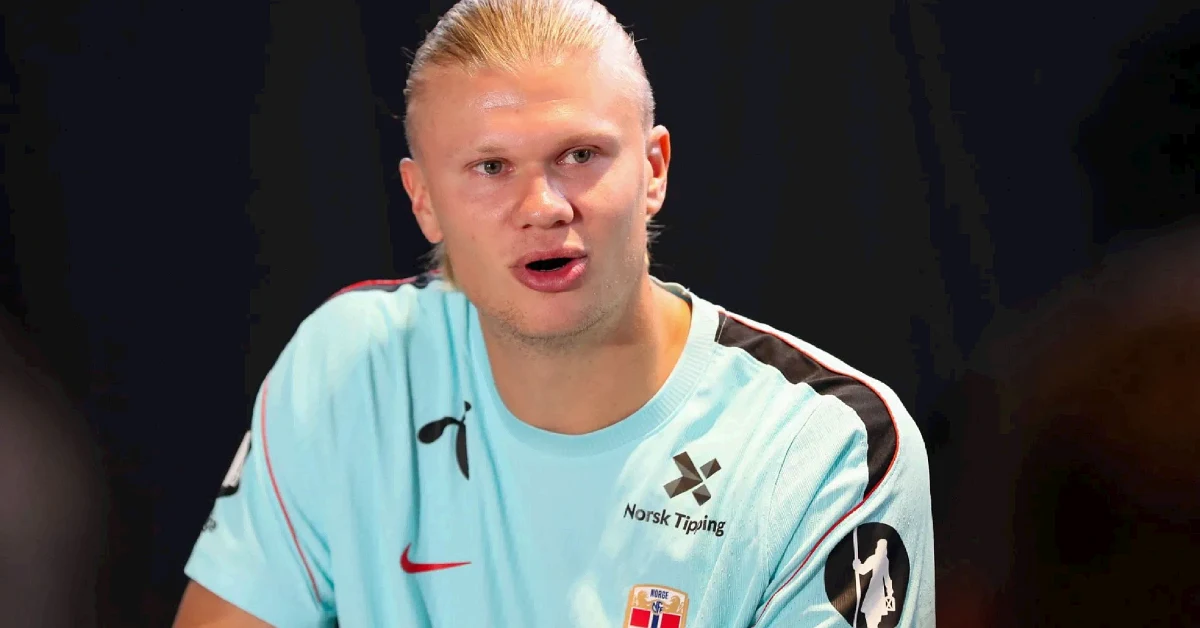
The 2026 World Cup has brought many unforgettable moments, but few have captured global attention quite like Erling Haaland‘s extreme eating habits. The Manchester City striker, who stands at 6 feet 4 inches, consumes about 6,000 calories daily. This is nearly double the amount recommended for an average active man and even exceeds what most professional athletes eat.
His unique approach to food, which he calls his “Viking diet,” has become a major talking point both on and off the pitch. As Norway reached the World Cup quarterfinals for the first time, Haaland’s eating routine went viral across social media. The 25-year-old footballer has turned his diet into a phenomenon, with millions following his journey and even trying to copy his meals.
The buzz around his food choices has become so big that major news outlets like Good Morning America and CBS Mornings have dedicated entire segments to his eating plan. A CBS reporter even attempted to eat like Haaland for a day, with results that surprised everyone.
What Makes Haaland’s 6,000-Calorie Diet So Different
Haaland’s daily menu is far from the typical chicken and rice routine that most athletes follow. His approach focuses on whole, unprocessed foods that he calls his “magic potion”. The striker starts his day with a massive breakfast that alone contains about 1,000 calories. This includes four eggs, yogurt, toast, and his famous raw milk drink.
Lunch for Haaland is equally impressive. He often visits Italian delis where he orders sandwiches packed with Parma ham, burrata cheese, sun-dried tomatoes, rocket, truffle oil, and pesto. One such sandwich, named after him, contains roughly 1,100 calories. The restaurant staff explained why they named it after him: “Because he chooses his favorite ingredients”.
Dinner is where the real challenge begins. Haaland is known to eat a 2.5-pound tomahawk steak that includes the bone marrow. His daily food list also includes beef heart, beef liver, sea bass, asparagus, egg fried rice, and large amounts of milk.
The Norwegian star explained his philosophy in his documentary Haaland: The Big Decision. He said, “You don’t eat this, but I am concerned with taking care of my body. I think eating quality food that is as local as possible is the most important thing”. He added, “I love food. I live to eat food”.
CBS Reporter Tried the Diet and Couldn’t Finish
The most telling demonstration of how extreme Haaland’s diet really came when CBS Mornings reporter Leigh Kiniry decided to try eating like him for one day. She managed breakfast well, handling four eggs, toast, yogurt, and raw milk without much trouble.
Lunch, which included the massive Italian sandwich, also went down smoothly. Kiniry even called it “delicious” but admitted, “I am starting to feel very full”. That was when she had consumed only about 2,000 calories, with roughly 3,000 more still waiting.
Dinner proved to be her breaking point. When faced with a 2.5-pound steak, Kiniry had to give up. She asked her crew members to help her finish the meal. Her failed attempt showed just how demanding Haaland’s eating routine really is for an average person.
Organ Meats and Raw Milk: The Controversial Choices
One of the most surprising aspects of Haaland’s diet is his love for organ meats. He regularly eats beef heart and beef liver, which he considers his “superfoods”. These foods are packed with iron, zinc, and B vitamins that help with muscle function and recovery. In his documentary, he called these items his “magic potion”.
Raw milk is another staple in his daily routine. He drinks it straight from the source, often buying it from a micro-dairy in Cheshire. However, health experts warn that unpasteurized milk carries risks of foodborne illness. His diet also includes raw honey, which he adds to his coffee.
The striker avoids ultra-processed foods and added sugars whenever possible. His meals focus on strong protein sources and whole ingredients. The Norwegian team’s head chef, Aaron Espeland, explained the approach: “As a chef, it’s really your task to bring the produce that is good and just prepare it with love and serve it basically as it is. It’s a really simple and not so complex cooking”.
His Training and Recovery Matches the Extreme Diet
Haaland’s diet is only one part of his overall fitness plan. His training routine is just as intense as his eating habits. His former coach at RB Salzburg revealed that even as a young player, Haaland was doing 300 press-ups and 1,000 sit-ups every day.
His sessions focus heavily on cardio, resistance running, uphill sprints, treadmill work, rowing machines, and HIIT sprints. He also does weight training to build explosive power. Haaland went from 86 to 94 kilograms, gaining what he called “gross muscle mass” rather than unwanted weight.
The striker puts special emphasis on mobility work. He fixed his poor range of motion with hip and groin exercises. This allows a man his size to finish from difficult angles on the field. He stretches after every session without fail.
Recovery is where Haaland truly separates himself from other athletes. He has a £50,000 cryotherapy chamber at home, along with ice baths, red light therapy, and daily physiotherapy. He follows strict sleep discipline, going to bed early with screens off and wearing blue light blocking glasses. His YouTube channel gives fans an inside look at these routines, showing him using red light therapy for muscle repair and alternating between ice baths and saunas in his garden.
His Pre-Match Ritual: Dad’s Famous Lasagna
Beyond the 6,000 calories, Haaland has a special pre-match ritual that adds a personal touch to his diet. Before every home game, he eats his father’s famous “hat trick lasagna”. This tradition has become so important that Manchester City manager Pep Guardiola reportedly joked about hiring Alfie Haaland as the club chef.
Haaland himself spoke about this ritual with humor. He said, “Dad makes lasagna, I score hat-tricks. Okay, I said, I guess for the rest of my life I will eat this lasagna the day before games”. This family connection adds a relatable element to his otherwise extreme eating plan.
Experts Warn Against Copying the Diet
While Haaland’s diet works for him, health experts strongly advise against regular people trying to copy it. A normal adult male only needs about 2,000 to 2,500 calories per day. Consuming 6,000 calories would lead to significant weight gain for most people, not improved athletic performance.
Purdue University’s assistant athletics director noted that Haaland’s level of food intake isn’t considered unusually high in his sport. However, experts told MedPage that his diet depends on many factors and is definitely not right for a normal person.
The organ-heavy diet should only be followed under professional supervision. Raw, unpasteurized milk carries documented health risks that health authorities warn against. Anyone considering major changes to their diet should consult a doctor or registered dietitian first.
You May Also Like:










What Regular People Can Learn from Haaland
Even though most people cannot eat like Haaland, his approach offers some useful lessons. He focuses on whole foods over processed options, making sure every meal has a solid source of protein. His commitment to daily mobility work is something anyone can adopt.
Treating sleep and recovery as part of training rather than an afterthought is another takeaway. Getting morning light and maintaining consistent daily habits are practices that work for everyone. As one fitness publication noted, “You cannot copy his genetics, his calorie budget, or his cryo chamber. You can copy the discipline. That was always the part that mattered”.
Haaland’s rise to fame during the World Cup has been remarkable. He scored seven goals as Norway reached the quarterfinals before losing to England. His celebration moves, including the Viking row after victories and his meditation pose after scoring, have made him a social media sensation. He even topped Spotify charts in Norway with a remix of a rap song he recorded as a teenager.
His girlfriend, Isabella Haugseng Johansen, has shared glimpses of their life together, noting that Haaland “eats so much” and is always thinking about “when is the next meal?”. She helps prepare his steak dinners and has become part of his online presence.
The 2026 World Cup may be over for Norway, but Haaland’s impact continues to grow. His diet has become a cultural phenomenon, sparking conversations about nutrition, athletic performance, and what it really takes to compete at the highest level of sport.
Also Read: Avengers: Doomsday Concept Art Shows Doctor Doom, X-Men and Hero Teams Unite
For more celebrity fitness stories and entertainment news, stay connected with VvipTimes for daily updates on your favorite stars and their extraordinary lifestyles.


Leave a Reply