

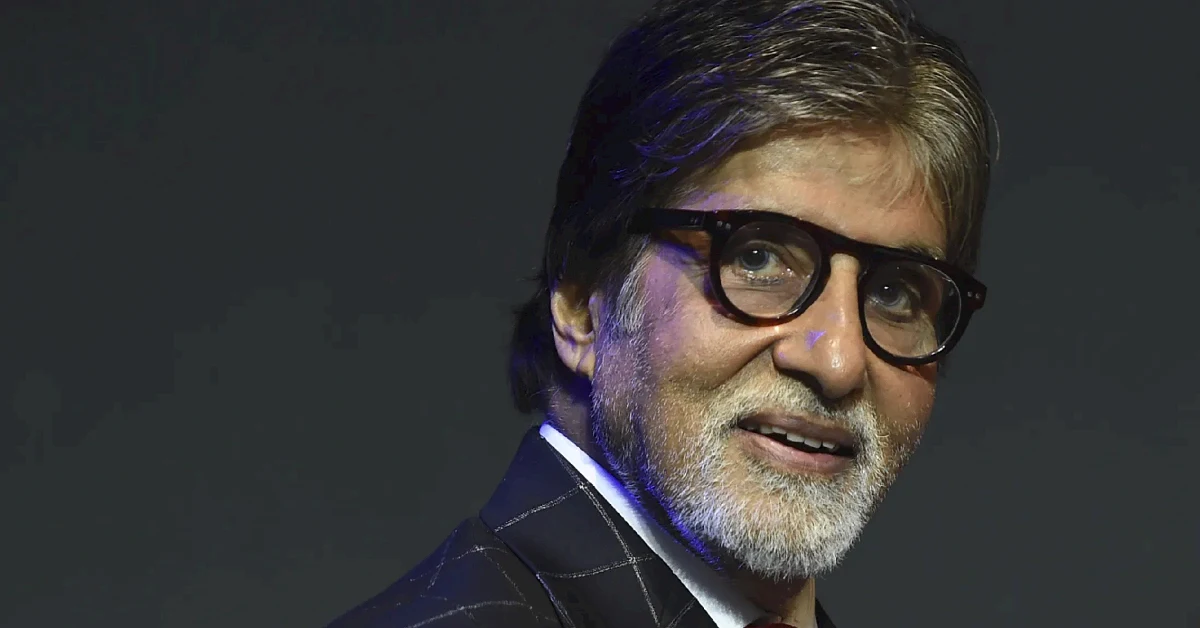
Bollywood megastar Amitabh Bachchan recently took a trip down memory lane and shared some eye-opening details about his early career. The 83-year-old actor revealed that during the golden era of Hindi cinema, he used to work on 10 to 15 films at the same time. He often shot two or three different movies in a single day. His main reason for taking on such a massive workload was the constant fear of not getting work in the future.
In his latest blog post, Bachchan reflected on how much the film industry has changed over the decades. He compared the fast-paced, non-stop schedule of his generation with the more planned and prepared approach of today’s actors.
Bachchan Says Role Preparation Was Not a Thing in His Days
Amitabh Bachchan explained that the word “prep” did not exist in his generation’s vocabulary. Today, actors spend weeks or even months getting into character. They do look tests, study their scripts deeply, and analyze every detail of their role. But back when he started his career in 1969 with Saat Hindustani, none of that was possible.
“The prep was a word or an explanation unknown to my generation and beyond. Now it’s a common vocabulary, where one prepares for the work to be undertaken. For me, it was an unknown entity.”
He praised today’s actors for the hard work and dedication they put into understanding their characters. He called it a “valid and thoughtful act” and said he has great admiration for those who give this aspect serious consideration.
Working 10-15 Films at Once Left No Time for Character Study
The veteran actor then described the reality of working in Bollywood during his peak years. He and many other actors of that time worked on 10 to 15 films simultaneously. Some days, they would shoot two or even three films in a single day.
“But in the good old days when we all worked on 10 to 15 films at the same time – many two or three the same day – it would have been impossible to prep for one and not prep for the other on the same day.”
Because of this hectic schedule, there was no time to prepare for any single role. Actors would arrive on set and only learn about the scene right before the cameras started rolling. A director or an assistant director would quickly explain the scene, and the actors would have to adapt on the spot.
The Constant Fear of Unemployment Pushed Him to Work Non-Stop
Many people often ask Bachchan how he managed to switch from one character to another within the same day. His answer was simple and honest. He said the fear of not getting future work was always there.
“Many ask how you slip from one role to another in the course of a day for different films. Bhai saheb, na karein to yeh dar rehta tha ki aage kaam milega ki nahin. (Brother, if we didn’t do it, there was always the fear of whether we’d get work in the future.)”
He explained that whatever the director told them, they tried their best to do it sincerely. There was no room for saying no or taking breaks. The insecurity about job opportunities was so strong that turning down a project was not an option.
Actors Had to Wait Months to See Their Own Work
Another interesting detail Bachchan shared was about the long wait actors had to endure back then. After finishing a film, they would have to wait for months until the movie released in theaters. Only then could they see what they had actually done and how their performance turned out on the big screen.
“Aur intezaar rehta tha, mahinon baad jab film release hoti thi, ki humne usmein kya aur kaise kiya. (And we would wait for months until the film was finally released, eager to see what we had done and how it had turned out.)”
This shows how different the filmmaking process was compared to today, where actors can see dailies or rough cuts much sooner.
A Look at Amitabh Bachchan’s Legendary Career
Amitabh Bachchan made his acting debut in 1969 with Saat Hindustani. Over the years, he has starred in more than 200 films. Some of his most iconic movies include Zanjeer (1973), Deewaar (1975), Sholay (1975), Amar Akbar Anthony (1977), Don (1978), and many others. By the end of the 1970s, he had already appeared in over 35 films and was regarded as India’s top film star.
His career spans nearly 57 years in the entertainment industry. Even at 83, he remains one of the most disciplined and respected actors in Indian cinema.
What’s Coming Next for the Megastar
Fans of Amitabh Bachchan have a lot to look forward to. He will reprise his role as Ashwatthama in the sequel to Kalki 2898 AD. The first part, released in 2024, was a massive box office success. It earned over ₹1,000 crore worldwide. Bachchan’s performance in the first film received widespread praise from critics and audiences alike.
The sequel is directed by Nag Ashwin and also stars Prabhas and Kamal Haasan in key roles. The makers have not yet announced the release date.
Apart from Kalki 2898 AD sequel, Bachchan will also appear in Ramayana: Part 1 alongside Ranbir Kapoor. He is also set to star in Section 84, directed by Ribhu Dasgupta, where he will share screen space with Diana Penty and Nimrat Kaur.
Comparing Old and New Bollywood
Bachchan’s reflections highlight a major shift in how Bollywood functions today. Modern actors have the luxury of time. They can do look tests, attend workshops, and rehearse for weeks before a single shot is filmed. The idea of “prep” has become a standard part of the filmmaking process.
But back in the 1970s and 1980s, things were very different. Actors were always running from one set to another. They had no time to think deeply about a character. They relied entirely on the director’s instructions in the moment. Despite this, they delivered some of the most memorable performances in Indian cinema history.
Bachchan’s ability to seamlessly switch between roles in a single day is a proof of his incredible talent and adaptability. It also shows the pressure and uncertainty that actors of that generation faced.
The Fear That Shaped a Generation of Stars
The constant fear of not getting work was not unique to Bachchan. Many actors of his time shared the same worry. The film industry was highly competitive, and job security was never guaranteed. Turning down a project could mean months or even years without income.
This fear pushed actors to say yes to almost every offer that came their way. It resulted in jam-packed schedules and back-to-back shoots. But it also created a generation of hardworking, versatile actors who could perform under any condition.
Bachchan’s recent blog post gives fans a rare and honest look into the struggles behind the glamour. It shows that even a superstar like him had to deal with insecurity and uncertainty early in his career.
Related:








A Career That Continues to Inspire
Amitabh Bachchan’s journey from a struggling actor to a living legend is nothing short of extraordinary. His work ethic, discipline, and passion for acting have made him an icon not just in India but around the world.
Even after all these years, he continues to work on exciting new projects. His upcoming films have already created a lot of buzz among fans. Whether it’s the Kalki 2898 AD sequel, Ramayana: Part 1, or Section 84, audiences are eager to see him on the big screen once again.
His recent revelations about juggling 10-15 films at once and the fear of no work offer valuable lessons. They remind us that hard work and perseverance can lead to greatness, no matter how tough the circumstances.
Also Read: Baby Do Die Do Review: Huma Qureshi’s Silent Assassin Movie Hits Theatres
Stay connected with VvipTimes for the latest updates on Bollywood legends and their incredible journeys. We bring you the most accurate and engaging entertainment news from around the world.

























































































Leave a Reply